24 February 2012

Oscar predictions, ahoy!

It's that time of year again, folks. The 84th Academy Awards are set to go down this Sunday. While I don't know if I'm crazy or awesome for continuing to care about who wins these things, and while I feel less prepared than ever before to talk about who will and should win in each of the major categories, I nevertheless bring you, once again, my hopes and predictions for this year's ceremony. (Jesus, this must be the first time I've made the Oscar prediction entry before I've even done up my top-10 movies of the year list!) Amid all the traditional Billy Crystal-style hilarity and the absurdly glamourous people mulling about, here's what I think and hope will go down starting at 8:30 pm my time on Sunday (as for you other times... figure it out). A W will appear beside the nominee that I think will win in each of the following categories, and an S will appear beside the one I think should win. (Obviously, an SW will appear if me and the Academy will likely agree, which would be SWeet.) Let's get rolling...


Best Picture

The Artist W
The Descendants
Extremely Loud & Incredibly Close
The Help
Hugo S
Midnight in Paris
Moneyball
The Tree of Life
War Horse

should have been nominated: Melancholia, Bridesmaids (shut up, I liked it a lot), and/or Drive

I don't know why there are only nine nominees this year rather than ten, and I don't know how the hell some of these things got in there (especially Extremely Loud, etc., although I shouldn't pick on that one too hard because I haven't seen it... but could it really be better than Melancholia? Really?) So I haven't seen that one, nor Midnight in Paris (although that will be shortly corrected), nor War Horse, but among the others I have seen, it's a ludicrously close call between The Artist and Hugo, oddly similar (and similarly emotional and wonderful and charming) ruminations on film history that are both gorgeous and make clever use of different technologies (3-D in Hugo's case; black-and-white and silence in The Artist's) and that also prove riveting stories in their own right. I have a feeling the buzz is behind The Artist but I personally liked Hugo just a teensy bit more. Either way, an utterly magical and transporting film is going to end up winning the night.

Best Director

The Artist - Michael Hazanavicius W
The Descendants - Alexander Payne
Hugo - Martin Scorsese S
Midnight in Paris - Woody Allen
The Tree of Life - Terrence Malick

should have been nominated: Lars von Trier (Melancholia)

Pretty much my same reasoning as above applies here. The Academy will likely honour Hazanavicius while I slightly prefer Martin Scorsese's work on Hugo. I almost want to throw Terrence Malick a bone here, as The Tree of Life was certainly the most-directed thing I saw all year, and has certainly grown on me since my lukewarm initial reception to it. It's a unique effort only a guy like Malick could pull off, but ultimately I have to go with my heart, which Scorsese captured this year with uncommon skill.


Best Actor

Demian Bichir - A Better Life
George Clooney - The Descendants W
Jean Dujardin - The Artist S
Gary Oldman - Tinker Tailor Soldier Spy
Brad Pitt - Moneyball

should have been nominated: Brad Pitt (for The Tree of Life), Ryan Gosling (either for Crazy, Stupid, Love. or Drive), Michael Fassbender (A Dangerous Method)

I haven't seen A Better Life, but sweet Jesus, were all the other nominees fantastic! I have no doubt that Demian Bichir was, too! So yeah... tough category. Honestly, if Brad Pitt were nominated for The Tree of Life rather than Moneyball, he would have my vote, since that was probably the best male performance I saw from anyone last year. But then, he was just swell in Moneyball, too. Gary Oldman was gripping in what I recall from Tinker Tailor Soldier Spy (don't ask). Jean Dujardin was pure suave charm in The Artist, effortlessly alternating between levity and despair. George Clooney was... well, excellent as always in The Descendants. Damn. The more I think on it, I think Dujardin was the best of this bunch, given that he had the added hurdle of having to act sans dialogue and he still knocked it out of the park. However, he might just be too new on the scene for Oscar to take proper notice. More likely: a George Clooney win for his admittedly wonderful work on The Descendants. Basically, however this turns out, I'll be pleased as punch.

Best Actress

Glenn Close - Albert Nobbs
Viola Davis - The Help W
Rooney Mara - The Girl with the Dragon Tattoo S
Meryl Streep - The Iron Lady
Michelle Williams - My Week with Marilyn

should have been nominated: Kirsten Dunst (Melancholia) - like, seriously, I'm really upset over this one -, Kristen Wiig (Bridesmaids), Elizabeth Olsen (Martha Marcy May Marlene), Jessica Chastain (The Tree of Life)... is that one a lead performance?

So, darn, I've seen two of these - The Help and The Girl with the Dragon Tattoo - so... sorry, ladies. I'm giving you short shrift compared with the guys. I swear I'm not a sexist jerk, as I did bear witness to some phenomenal female performances this year... unfortunately, the Academy is dumb and didn't nominate any of them. Sigh. Between the two I've seen, I thought Rooney Mara was an absolute revelation and kept me riveted for the entire two-and-a-half-plus hours of The Girl with the Dragon Tattoo and delivered one of the most interesting characters in many a moon. Of course, I loved Viola Davis and really the entire cast of The Help, too. I feel like Viola Davis has the buzz behind her (and she was in the sort of movie the Academy goes in for way more than The Girl with the Dragon Tattoo, to boot), so she will definitely come out on top. But Mara was just way too astonishing for me to not pick as my personal favourite. (Did I mention this was a lame category?)


Best Supporting Actor

Kenneth Branagh - My Week with Marilyn
Jonah Hill - Moneyball
Nick Nolte - Warrior
Christopher Plummer - Beginners W
Max von Sydow - Extremely Loud & Incredibly Close

S = ?

should have been nominated: Phillip Seymour Hoffman (The Ides of March), Albert Brooks (Drive), someone in something I've seen

So I'm going to be even more of an asshole in this category. I've seen precisely one of these: Moneyball. So, um, go Jonah Hill! (The dude was pretty tremendous in that movie, don't get me wrong. I just feel like I have no frame of reference here.) I really wanted to see Beginners before Sunday but, alas! 'Twas not to be. I really am not sure who is going to win this, but I suspect it will be either of the two gracefully aging thespians, Christopher Plummer in Beginners or Max von Sydow from Extremely Long Title. My friends in the know say Plummer was extraordinary, so I feel like the Academy will throw him a bone. As for who should win, I'm actually abstaining from this one. Sorry, guys.

Best Supporting Actress

Berenice Bejo - The Artist
Jessica Chastain - The Help
Melissa McCarthy - Bridesmaids
Janet McTeer - Albert Nobbs
Octavia Spencer - The Help SW

should have been nominated: No giant oversights spring to mind here; maybe Shailene Woodley (The Descendants)... hmm... good category, I guess.

OK, well, I feel better with this category, as the only one I haven't seen is McTeer in Albert Nobbs. The rest were all pretty excellent, and all quite funny in their way. I'm glad comedic (or at least semi-comedic) turns have gotten due recognition ths year. Bejo was a vibrant charmer, Chastain was hilarious yet deeply empathetic as a clueless housewife in The Help, McCarthy's antics in Bridesmaids had me in fits of laughter throughout the movie, and Spencer was just a sassy yet serious joy to behold. Another close-call category, but I think the gusto with which Spencer infused her role will win over the Academy just a little bit more than any of the others' efforts. It certainly won me over, too.

Best Original Screenplay

The Artist - Michael Hazanavicius
Bridesmaids - Kristen Wiig and Annie Mumolo S
Margin Call - J.C. Chandor
Midnight in Paris - Woody Allen W
A Separation - Asghar Farhadi

should have been nominated: Melancholia, possibly Crazy, Stupid, Love., Super 8... Young Adult if I want to get really broad

I wish I could have seen Margin Call, Midnight in Paris, and A Separation in a timely fashion but what can you do? Of the ones I've seen, Bridesmaids was almost incredibly well-written. I actually can't believe how observant and sharp and witty and warm and wise that movie was. Many of the same things can be said about The Artist, but that's a hard screenplay to judge because of the lack of dialogue; Bridesmaids' dialogue, on the other hand, was a piquant, surprising joy to behold unfurling. It's a close call for me, but, perhaps surprisingly, I'm rooting for the latter. Midnight in Paris might have some of that shrewd charm as well, and indeed, way more of the prestige factor that the Academy loves than Bridesmaids has, so that one will likely pull ahead on Sunday.


Best Adapted Screenplay

The Descendants - Alexander Payne and Nat Faxon & Jim Rash
Hugo - John Logan
The Ides of March - George Clooney & Grant Heslov and Beau Willimon
Moneyball - screenplay by Steven Zaillian and Aaron Sorkin; story by Stan Chervin SW
Tinker Tailor Soldier Spy - Bridget O'Connor & Peter Straughan

should have been nominated: 50/50, The Muppets (because I liked it and it should be nominated for something and why not this?)

Decent round-up. Really decent round-up. I love Hugo incessantly, but I think the screenplay might be the weakest link in its chain of glory... on paper, it seems a bit messy. The Ides of March was crisply done stuff but a bit out-matched here; same with Tinker Tailor.... That leaves Moneyball and The Descendants. Very close call. I think the Sorkin factor will put Moneyball over the edge for the Academy, and I feel like Moneyball's writing and dialogue was for sure the best, meatiest part of the movie. Of course, The Descendants was a warm, smart, bitter, witty, funny, tragic balancing act from the always remarkable brain of Alexander Payne, joined by Nat Faxon and Jim Rash (the Dean on Community, dontcha know?). It really could go either way. But I'll stick with my gut and put my money on Moneyball.

----------
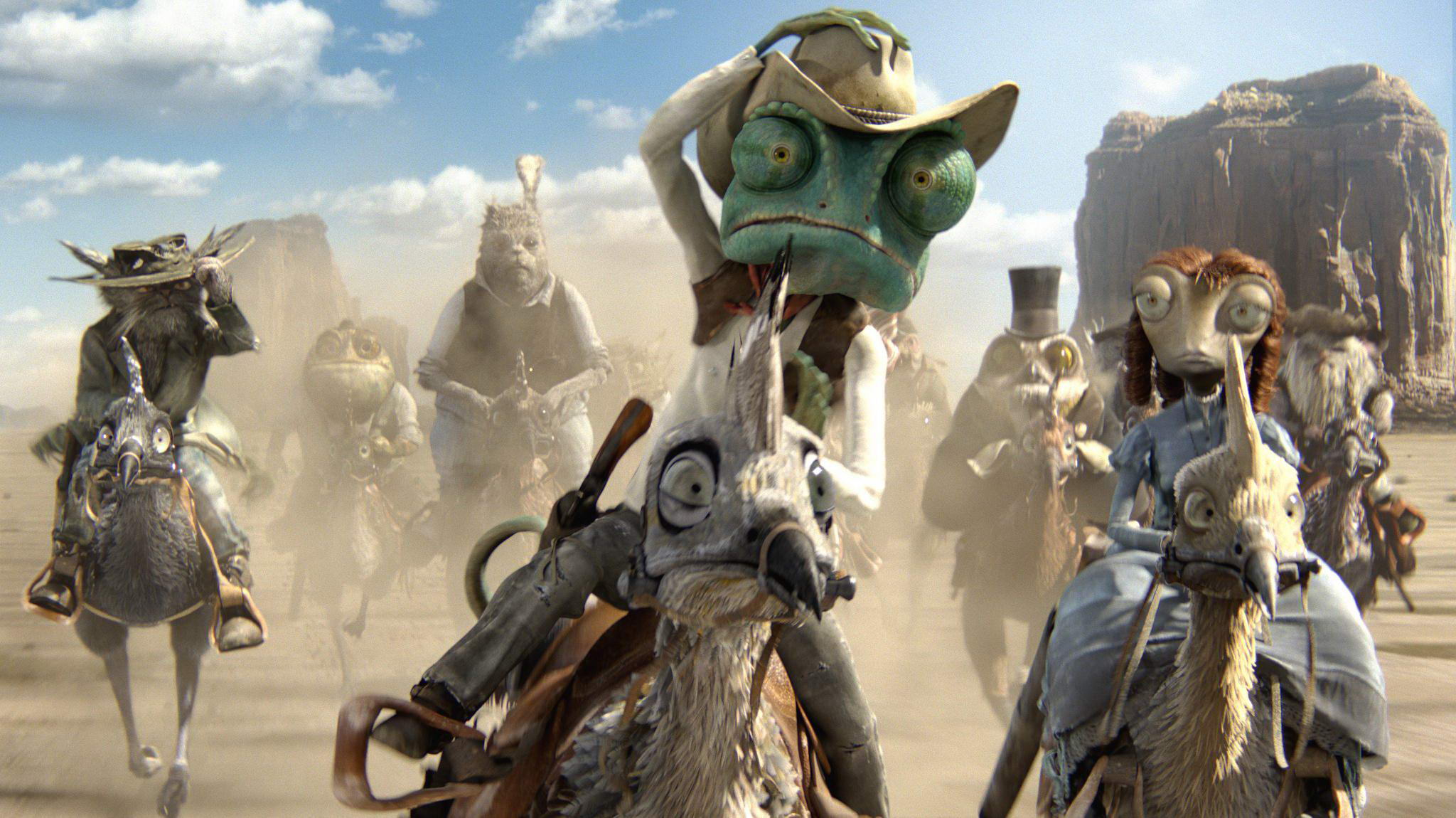
That'll do for my extensive predictions. As for the other minor categories of interest, I'm rooting for Rango for Best Animated Feature in a surprisingly (but appropriately, given the awfulness of Cars 2) Pixar-less year and I feel like the Academy will agree, although I liked Kung Fu Panda 2 a lot too, and I've heard great things about Chico & Rita. The Tree of Life should take the cake for Cinematography since it was maybe one of the best examples of that ever, let alone last year. Hugo should and probably will take a lot of the other technical categories. Finally, "Man or Muppet" from The Muppets is the clear winner for Best Original Song.

Happy Oscar-ing, everybody!

05 November 2011

Film may be dead, but should we mourn it?


Roger Ebert (see link below) has announced "the death of film" in the face of the unstoppable digital wave and new movie-watching options, like Netflix or movies-on-demand services on XBox 360 and the like. But how tragic an occasion is this, really? Certainly, film (real celluloid, that is) has always had a particular vibrancy to it that the coldness of digital falls short of matching. It has an ineffable texture to it that exerts a strong appeal on film buffs everywhere. I remember seeing the re-release of Apocalypse Now way back in 2001 (I was way too young and certainly had far too indulgent parents). That was real film. Technicolor. Big IMAX screen. Big IMAX speakers. It was one of the major filmic events of my life. It enveloped you, visually and sonically, like nothing else.

Experiences like that form the backbone of Ebert's lament on the death of film. It is indeed almost primally appealing to sit there in the dark, with a similarly rapt select group of your cinematic compatriots, and let the vivid, near-tangible image and clear, dominating sound wash over you and transport you away to a magical land... for a couple hours, anyways. This is the ideal cinematic experience, and it does happen every once in a while, and it's a rare joy when it does.

But is this the reality of going to the cinema today? Not too often. Often, the movie fails to grab you and that aforementioned alchemy doesn't quite happen. Celluloid or digital wouldn't make much of a difference in improving the overall quality with these middling examples. Sometimes, the "cinematic compatriots" instead become adversaries, distracting with their phones, their mouths, and their bodies by texting, talking, or kicking... or chewing a little too loudly. Rarely, but often enough to be annoying, the projection fails in some way and your experience is viciously interrupted - even if it's set right soon, it's hard to get back into that state of mind.

And when this type of experience becomes too frequent, it's comforting (maybe not as comforting as the ideal cinematic experience, but close enough) to know you can just sit at home and watch a movie at your leisure, albeit on a smaller screen (a wayyy smaller screen if you're me and not rich and don't have a home theatre set-up), albeit on a crappier digital version, albeit without that ethereal communal vibe. For most movies these days, that, unfortunately, does just fine. The option is there, at any rate, whenever you should choose to partake of it.

While Ebert does well to point out the inferiority of digital to celluloid, just as he aptly denigrates 3-D (though to too great an extent sometimes) in favour of 2-D (I'm all for 3-D in the extremely rare instances it's done well and adds something to the finished product), but he misses the other reasons why real film's death has become rapidly apparent. It's not just the convenience factor or the audience's preference to digital, but that the movie-going experience so rarely achieves that special alchemy that would justify its continued existence.

Of course, Ebert has denigrated these kinds of distracting audience behaviours in his previous writings, so he may have just willfully decided to focus on other aspects for this post. And indeed, I'm as baffled as him why digital is winning the battle over film in theatres, not just in terms of home viewing options. But while I love the ideal film experience with such an ardor that it will be hard for even any romantic connections to match it, the ideal doesn't happen nearly as often as it should. And many movies with average production values work just as well on a private small screen as a public big one. Reality is a cold bitch that way.

Digital should hardly be considered a substitute for film w/r/t the best and brightest movies out there, but there's a reason cinema attendance is dwindling. Film may be dying, but to what extent should we mourn it? Or is there anything we can do to resuscitate it (and the experience associated with it) so that it can brighten our cinemas another day?

http://blogs.suntimes.com/ebert/2011/11/the_sudden_death_of_film.html

14 September 2011

A bit of self-promotion and housekeeping

So in keeping up with the latest blogging trends, I've opened up a brand sparkling new blog-type site at Tumblr, which can be visited here. But fret not, dear reader! I still intend to post here. Basically, the Tumblr will be used more as a repository for quotations, photos, lyrics and little snippets of things that strike my fancy (particularly out of books since I'm now fully into the Master of Arts degree in English mode now), and of course reblogged bits of awesomeness. The entries here will be probably longer tracts, i.e. movie reviews, music reviews, book reviews, TV reviews, top-ten lists (speaking of which, I might give you soon an updated top-ten movies of 2010, because since crafting that list way back when some new movies have caught my attention and demanded inclusion... I'm sure you can guess which), and longer rants and miscellany, some of which I may also post over on Tumblr. Especially if I can throw on a visually striking picture or two to go along with it, as I did with my Tree of Life review. While there may be a bit of cross-pollination, I hope to not get too redunant with this two-blog situation.

In other news, I think I may have officially undervalued the Victorian novel, as the first text assigned in my new class on the Victorian novel proved wholly delightful, if not a bit inconsistent and way too long to be suitably read in the span of about two weeks. The work in question? Vanity Fair, by William Makepeace Thackeray, a sterling example of satire that never sacrifices its sense of adventure, romance, emotion, and epic scope despite poking wicked fun at every turn at the genre of which it is supposedly a part.


No, not this... although I'm sure that this is not wholly without merit.

It throws everything about Victorian life -- and much of life in general, as well as the very idea and building blocks of fiction -- up to question: class structure, gender roles, the importance of money and (obviously) vanity to far too many people, literary genres, the role and reliability of the narrator in a novel. Complex w/r/t character (especially the indomitable Becky Sharp, who you love to hate and can never quite get a firm grasp on), story, intellectual intentions, and structure, it may have some inconsistencies with characters showing up and disappearing at random, but it's damn near a masterpiece. And since I'm woefully unfamiliar with a lot of Victorian fiction (except for maybe Dickens and certain adaptations of Sherlock Holmes), considering it, before (probably unfairly), as stodgy and lacking in a certain verve and electrifying sense of psychological depth and ontological contradiction that came later with Modernism and my man Samuel Beckett, it was all the more surprising. Rock on, Thackeray! And thank you, that class, for broadening my horizons.

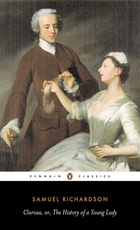
Next time, I may just discuss Clarissa, the longest novel ever written in English and the main focus on my other class on narrative prose of the 18th century. Sounds intimidating but it's grabbing me pretty hard already, so huzzah!


Like this, but bigger and about a foot thick.

21 August 2011

The Tree of Life (Terrence Malick, 2011)

Serene, vibrant, candy-coloured, swooping images of verdant nature and the vast cosmos (even including, yup, CGI dinosaurs); vivid portrayals of childhood, brotherhood, family, tragedy, love, fear, death, and the daily minutiae of life in the ’50s in suburban Texas, featuring one of the most intimate, studied performances ever seen from Brad Pitt, and with wonderful, natural support from Jessica Chastain and Hunter McCracken (and all the child actors comprising this typical yet specific family); and the psychic and eventually real wanderings undertaken by Sean Penn as one of the now-grown boys, a present-day architect wracked with guilt and grief. Indeed, who else but Terrence Malick would even dare attempt such a staggeringly ambitious cinematic attempt to summarize all of life and wax metaphysical on ‘the way of grace’ and ‘the way of nature?’

The Tree of Life is most notable for its attempts to go both perilously near to dizzyingly far in its examination of life, the universe, and everything, going both macro in the swirling, gorgeous CGI sequences populated by planets, galaxies, waves, fire, lava, and sprawling forests and micro in its up-close examination of just one family in one place in one time. And while the sequences with Sean Penn looking lost in both tall, shiny glass buildings and dry deserts are in theory meant to be the connection point, to marry the specific with the universal, they unfortunately served not to broaden or connect but to only make things more vague and abstract. The movie’s segments are all among the most beautiful ever put on film, accompanied, in true Malick fashion, by a sweeping, classical, orchestral score, evoking all the right notes of mood and emotion; but together, they’re three great cinematic tastes that taste… less than stellar together.

Pitt is absolutely gob-smackingly intense and vital as a severely tough, severely loving father to a group of boys and husband to the radiant Jessica Chastain. It will undoubtedly wind up one of the performances of the year, maybe multiple years, and might just be Pitt’s best work to date. The scenes of family life here in this pin-pointable time and place are scenes to linger about it, to surround yourself in, and are undoubtedly the heart of the picture. Or, at least, they probably should be. Certainly Malick generously pours all his filmmaking gifts onto this part of the story, in all the best ways, resulting in a sense of intimacy and piercing emotion (it would be too simplistic just to call it ’50s-era nostalgia… there’s a striving for something even more timeless here, almost mythic) matched only by its detailed, painstaking realism and visual and aural splendour. There’s little fault to find here in these vivid scenes of family life, love, fear, and loss, and abundant wonders to be explored by those who care to venture forth.

Malick also wants, however, to go back, and forward, and all around in both time and space to chronicle the beginning and end of time, and as striking as his mostly computer-generated visuals are here (of planets and stars and galaxies and violent weather, crashing seas, molten lava, and general upheaval… and, oh yes, dinosaurs) and as soothingly lovely the musical accompaniment, it’s all just a bit too much. His ambition is almost too great for any filmmaking to ever quite catch up to it, as truly admirable as this all is. I’m not going to call it all completely self-indulgent, because that would discount the very real visceral tug I felt during a lot of this; but it may verge on egregious, patience-testing. And one would think here that these scenes replete with nature in all her glory would be Malick’s testament to ‘the way of nature’ and would save the ‘way of grace’ stuff for later. But he does stumble in shoehorning in a rather unconvincing bit about a carnivorous dino taking pity on a fellow great lizard who is in pain, choosing not to eat it and moving on, grace infusing even the most wholly natural of encounters.

Which leaves us, of course, with Sean Penn. Now, there’s nothing inherently wrong with Malick using the actor as sort of a figurehead, an allegory for psychic and spiritual and existential wandering and the whole Human quest for understanding rather than a complete, individual, really human character (such that Pitt so resoundingly embodies… although he too is not without allegorical significance, he transcends being merely allegorical). The thing is, the star seems just too huge to have such a limited, quiet, dare I say flat role and his intensity, having no outlet, just sort of transforms into an overwhelming blankness that makes the viewer lost and disconnected from latching onto these synthesis scenes (between the thesis of the all-natural world of dinos and cosmos and the antithesis of Brad Pitt and discipline and religion), which of course throws the whole equation kind of off-kilter. It’s just hard to reconcile the image of movie-star-Penn with the existential wanderer-type Penn that Malick wishes to convey, as good as that might sound on paper.

While this is hardly the full treatment such a dense and ambitious movie quite deserves, and hardly the last word on it, as I’m sure The Tree of Life will provoke endless academic discussions among loftier professorial types than myself, these have been my major thoughts on this riveting and maddening, stunningly beautiful yet excessive cinematic experience. It’s completely true that I’ve never seen anything like it, and undoubtedly the very real effort Malick put into it makes it perhaps the truest, most Malickian Malick film (un vrai film de Malick, as the auteurist theorists might say) ever, and an extraordinary thing to behold despite my misgivings. Malick has a lot to say here, and if my theory holds, the man seems to favour the ‘way of grace’ over the ‘way of nature,’ if only when it comes to cross-dino relations. And while I’m all for viewpoints that differ from my own, rather atheistic ones, I’m not sure he said it as well as he could have, despite saying plenty and trying to say even more. Composed of stunning parts, it’s just a bit too inconsistent as a whole. B-

10 April 2011

The Wire: television-as-novel or television-as-video-game?

The Wire, as a select few of you may know, sits at the very tippy-top of the list of my favourite television programs -- hell, my favourite anythings -- of all time. I, alongside the creator of the show, David Simon, would usually say that it transcends pretty much anything else attempted on serial television to be more like an epic novel in its structure. It is so densely packed with well-rounded characters and situations that compound and build towards exhilarating climaxes, and it takes place on a huge canvas, trying to get at nothing less than the hum and flow of an entire city -- the gritty, real-life port metropolis of Baltimore, MD. Perfectly acted, written, paced, directed, with a cynical, biting sense of humour that deepens its serious, often violent portrayals of urban life, The Wire is especially novelistic in the way its episodes resemble chapters of a book, and the seasons are like books in a larger epic novel.

But in his unconventional yet illuminating and spot-on essay, Jason Mittell argues that The Wire can just as easily, if not better, be compared to the video game genre. He uses a comparison that even further illuminates why I responded so well to The Wire, likening it to an amalgam of Will Wright's simulation computer games Sim City and The Sims -- big-time favourite time-passers of mine from childhood. The attempt to capture all the little things that make a city tick particularly link it to the former game, and the focus on characters and their decisions with regard to the institutions in which they find themselves (the drug trade, police, dock workers, school teachers, city councilpersons) connect it to the latter. Furthermore, the seasons are like "replays" of a game, in that there are certain similarities in plot but with little twists that alter the game. The characters also frequently mention games (especially with regard to their different lines of work) in the show's dialogue.

At any rate, it's certainly an interesting way of viewing the show, and is a seemingly out-there comparison that has surprising merit. The essay is definitely worth a read if you've seen, or are even thinking about seeing, The Wire.