Showing posts with label lists. Show all posts

11 March 2012

The best films of 2011

The ides of March draw near, and it's high time I finally posted my thoughts on some movies from last year other than The Tree of Life, despite the fact that I saw pitifully few movies from 2011 compared to usual, and despite the fact that I didn't get to see nearly everything one would generally be expected to see before composing such a list in order for it to have any worth whatsoever. By way of comparison, I saw 53 films from 2011; that's way fewer than the 80 or so I ultimately saw from the two years prior to that, and substantially fewer than the 100 I saw from 2004. I didn't get to see Beginners, because the movie gods hate me, apparently; ditto A Separation, Pina and Uncle Boonmee Who Can Recall His Past Lives. Those were probably my biggest failures/gaps in knowledge/experience as a cinephile of last year. And sweet lord, did I ever wish I was able to see them, so get off my back, man! I also didn't get to see those end-of-the-year girl/woman-power biopics The Iron Lady or My Week With Marilyn, which I'm not really that sad about, since I've heard they're not all that anyways. I saw pitifully few documentaries, although I was lucky enough to finally get to see Cave of Forgotten Dreams, and even luckier enough to see Nostalgia for the Light, which a quick glance at Metacritic informs me hardly anyone saw. Like Crazy, War Horse, and Attack the Block were a few more things I sort of wanted to see but that eluded my grasp for one reason or another. If there's anything else you think I'm crazy for not including, maybe I didn't see that either. A quick glance at my 2009-11 movie viewing log over yonder to the right there (- - > ) will allow you to verify if this is the case. Or maybe I did see it and wasn't as impressed as you were with it. Tough break.

The best list also goes to 15 this year because too many things I was wild about didn't quite crack the top-10, so consider it an added bonus.

With that housekeeping out of the way, let's start the ball rolling!


Honourable mentions:

Cave of Forgotten Dreams (Werner Herzog), a mesmerizing rumination on what it means to be human that takes off in profound, if sometimes obscure, philosophical directions from the starting point of the Chauvet Cave paintings, the earliest known works of art ever discovered. It's a beautiful, haunting, and leisurely film, with Werner Herzog masterfully exploring the meaning, mythology, and method behind these unfathomably early forms of human expression, finding something oddly new and relevant in the unearthing. (Unfortunately, I have no comment as to the success of failure of Herzog's use of 3-D, since this was a DVD rental. I know, I suck.)

Crazy, Stupid, Love. (Glenn Ficarra, John Requa), a polished, bittersweet romantic dramedy that ends up just where you expect it to, yet it's surprisingly spiky fun to watch it get there. The performers gel perfectly together, whether it's Steve Carell as a straight-laced recently single middle-aged yuppie, Ryan Gosling as the smooth-talking and dressing lothario who helps the sadsack back onto his feet, Emma Stone as the girl who's so delightful she may just get Gosling's character to settle down, or Julianne Moore, as Carell's sweet but unsatisfied now-ex-wife. The energy and wit and emotional sincerity and vibrancy that the whole team brings to the enterprise is winning enough to suggest classic Hollywood screwball comedy, and though the plot is largely programmed from the beginning, the storytelling itself is deft.

A Dangerous Method (David Cronenberg), a stately, searingly acted, maybe a bit fanciful, but nevertheless illuminating examination of the real friendship between pioneers of psychoanalysis Sigmund Freud (Viggo Mortensen, biting into yet another role for director David Cronenberg with gusto) and Carl Jung (Michael Fassbender, astonishing), as well as Sabrina Spielrein (an appropriately agitated Keira Knightley), the woman that provided one of Jung's earliest case studies and got in between the two men before staking out a psychoanalytic career of her own. It's a movie that excites both cerebrally (as expected) and bodily, with the sexual themes that animated Freud and much of Jung's work bubbling to the surface in compelling ways.

The Ides of March (George Clooney), an almost ridiculously star-studded affair that provides a bracingly cynical, if not wholly original, look at the elaborate backstage of American politics. Director George Clooney marshalls a stunning array of talent, including, well, himself as a hopeful and charismatic presidential candidate, Phillip Seymour Hoffman as his chief advisor, Ryan Gosling (again!) as an eager upstart on the campaign, Paul Giamatti as a slick and weaselly advisor for the other team, Marisa Tomei as an ambitious reporter... need I go on? The film is a suspenseful and intelligent immersion in the deeply intertwined worlds of politics and the media--the spin zone, in other words--that strives for, and almost achieves, the heft of a modern-day tragedy. It's frequently exhilarating even if it might be almost too focused on its sprawling (but talented!) cast and shoehorning all these disparate characters into the fray.

The Muppets (James Bobin), a blast of pure unironic joy. The plot may be wispy and fall apart under close inspection, yet the film is such a bouncy delight, full of clever and goofy songs, it's hard not to leave the cinema grinning from ear to ear. And Jason Segel and Amy Adams really are the perfect old-school-charming stars to lead this endeavour.

Of Gods and Men (Xavier Beauvois), a sobering and quietly enthralling look at human (and spiritual) determination in the midst of an ever-changing world fraught with political upheaval. Great performances, especially from Lambert Wilson, beautifully portray the resolve (and perhaps the folly) of these stoic men who are doing the best to follow their hearts.

Rango (Gore Verbinski), the year's best animated film (and it pains me to say that in a year with a Pixar offering), a rambunctious cavalcade of irreverent metacinematic references, witty one-liners, rowdy slapstick, rollicking adventure, and delightfully odd and distinct sights and sounds, served up in a daringly ugly (yet starkly beautiful, for all that) brand of CGI animation well-suited to the withered and parched desert critters it depicts.

----------

The real list!


15. The Girl with the Dragon Tattoo (David Fincher)
Under the controlled direction of David Fincher, this American version of The Girl with the Dragon Tattoo effortlessly rises above the sleek and competent if a bit unspired Swedish adaptations of Stieg Larsson's Millenium trilogy to give its mysteries and depths of seediness and psychological affliction an often mythic, always exhilarating (even at two-and-a-half hours) appeal. The movie seems overly faithful at times to Larsson's verbosity and somewhat messy plot structure (based on an assessment of the length of the book and comments of people who've actually read it), and yet there's such a tonic mixture of the grittily realistic and the awesomely operatic going on in the texture of Fincher's filmmaking that it's smooth going even over these occasional lumps. And he has found a remarkable muse in Rooney Mara, an absolute revelation as the titular figure, Lisbeth Salander, a shockingly intelligent and disturbed computer hacker with a violent past, abused by the systems that bind her. Daniel Craig is compelling as Mikael Blomkvist, an intrepid but recently disgraced reporter hoping to uncover a new story that will restore his tarnished reputation, mixing grim determination with a surprisingly easygoing affability that makes his character all the more watchably human. Christopher Plummer is shadily plummy as the patriarch of the Vangers, a wealthy industrialist family, who sits atop the untold secrets of the clan, while Stellan Skarsgard is creepily intense as Martin Vanger, who may have been involved in the mysterious disapparence, years ago, of one of the other Vanger children. These performances are enthralling but the movie really belongs to Mara, riveting from first frame to last, who makes Lisbeth's quest for truth and freedom (and revenge) downright iconic. Fincher's aesthetic instincts are top-notch across the board, his expert use of music and visuals emphasizing the swirling undercurrents of repressed trauma and violence and scandal and tension that lie beneath the surface. Under his steady hand, the film becomes a darkly exhilarating thriller that brings Larsson's novel to full and clear cinematic life.

14. The Future (Miranda July)
Fair warning: my lists tend to be an eclectic mixture. There is a fairly decent heap of whimsy going on in Miranda July's latest cinematic endeavour (she previously directed the enchantingly odd 2005 trinket Me and You and Everyone We Know) that many viewers may find off-putting and overly precious--or possibly just inexplicable. I didn't quite foresee myself falling so completely under the spell of this unassuming story of two flighty, naïve, self-absorbed, hipster-ish early-thirty-something lovers (played by July herself and Hamish Linklater) and their impulsive, half-heartedly life-altering decision of adopting a stray cat, a choice that winds up having far more profound an impact on both of them than they first envisioned. We shouldn't logically care about these people, and yet July draws us in. Both characters seem to drift apart and make new connections with other people and eventually time and space start to break down as secrets and regrets bubble to the surface and Linklater's character literally stops time (with the help of a kindly, personified moon) in order to prevent the inevitable catastrophe from occurring. Oh yeah, and the cat, Paw-Paw, actually speaks, delivering touchingly pseudo-philosophical monologues as he waits around for his owners to come retrieve him from the animal shelter. The film presents the sweet innocence of these characters' lives only to pull the rug out from under us when reality finally does intrude on these isolated, almost infantile characters, making the emotional impact all the more poignant. The mood is serene; July's direction, writing, and acting here are constantly inventive, surprising, calm, and assured; light and dark, hope and despair, love and fear, airy goofiness and deep contemplation are finely balanced. This ridiculous premise has no business working as well as it does, and it's a tribute to July's singular talent that it resonates so thoroughly in spite of itself.


13. Super 8 (J.J. Abrams)
Undoubtedly the best pure 'popcorn movie' in many a moon, Super 8 feels fresh in its very cozy nostalgia. This riveting tale of amateur movie-making children who stumble inadvertently onto something big and possibly otherworldly that even causes adults to panic and call in the cavalry, Super 8 zooms full-speed ahead into the cinematic stratosphere buoyed by skillful, inventive, knowing, loving writing and direction from J.J. Abrams that harkens back to cinematic blockbuster tradition of yore and deeply committed performances from the best child ensemble (with Elle Fanning being a particularly recognizable and effective standout) since... I don't even remember; possibly Stand by Me, even. And that's not to detract from the charms of Kyle Chandler as a determined small-town sherriff who has a way of tough but nevertheless sincere love for his family and his community. While the suspense drains away a bit the more we see of the "monster," there's a wonderfully sustained sense of child-like wonder and awe going on in the movie, a palpable fear of the unknown mitigated, finally, by a stirring reassertion of the strength of love and friendship. Classic Hollywood-style filmmaking at its most potently effective.

12. Moneyball (Bennett Miller)
Those who know me well know I don't generally give two figs about baseball, so a baseball movie is often a tough sell, but I was sure rooting for team Moneyball from beginning to end. (Although, come to think of it, I was quite fond of Bull Durham, and Field of Dreams and The Rookie were both enjoyable romps in the field of corniness.) This is a sharply written, crisply and excitingly directed (there's a bit of a lag in the seventh-inning stretch but the pacing is generally as smooth as a freshly dusted home plate... are my baseball metaphors working here at all?), and winningly acted story about the daring it takes to think critically, adopt a different yet sound strategy despite protests from traditionalists, and the guts and leadership to put it all into place. Brad Pitt chomps into the meaty roll of charismatic, fast-talking, but desperate Billy Beane, manager of the Oakland A's, forced to adopt a more mathematical, anti-intuitive scouting strategy to get his failing team back on track. Jonah Hill is remarkable (miles away from his stereotypical fat-funny-dude roles he often takes on in various Apatow and Apatow-like comedies and bromances) as the behind-the-scenes numbers-cruncher who takes on a central importance in the A's management; the new role looks good on the character as well as the actor. Phillip Seymour Hoffman is also in peak form as an increasingly weary coach who questions Beane's strategy. Everything is on the money here, and the film is a brisk and exciting examination of politics, strategy, resolve, open-mindedness, empathy (many of the players Beane winds up recruiting thought they were done for good but find they do still have a place in the world--and on Beane's eclectically spruced-up team), decision-making, and masculinity. I'd call it a cinematic home run, but I figure you'd throw things at me if I continue with the baseball puns.

11. Drive (Nicolas Winding Refn)
Ryan Gosling was all over the place last year, and apparently all over this list, too. Here, he's a stoic, perma-composed stunt driver who moonlights as a ruthlessly efficient get-away driver for all manner of criminal and low-life thug. The opening chase scene is breathlessly intense and ingeniously staged, and lest we worry that director Nicolas Winding Refn has spent all his wiles and energy one this one virtuoso setpiece, the pace hardly lets up from there. After that, Gosling gets tangled up with a Dame (a radiant Carey Mulligan), as is often the case with this sort of thing, and things get complicated when it turns out she's married to a recently released convict who has lingering trouble surrounding him... trouble that threatens the family the Driver (that's the only name we get for Gosling's character) has grown so close to... trouble that must be dealt with, with extreme severity. Bryan Cranston (nicely jovial) also shows up as a mechanic and trusty friend to the Driver, as does Albert Brooks (calmly menacing) as a calculating thug and Ron Perlman (the gruff, noble bruiser of a title character in Hellboy; gruff but somewhat more lunkish and less noble here) pops in as a muscly goon; Christina Hendricks makes a nifty femme fatale. While the focus has rightly been on Gosling and Brooks here, the movie really boasts a fine ensemble all around, well-integrated and always playing off each other in fascinating and surprising ways. The movie's plot is all surface, or should I say the style is so thick and invigorating here as to become the content? There's little depth here, nor did I really expect there to be, but that's not to negate the movie's achievements; in Drive's best moments, and there are a lot of them, the characters almost slide into archetype, myth. It helps that the direction from Nicolas Winding Refn is beautifully modulated, at one moment calm and controlled, then bursting into an operatic grandeur with its stylish, slow-paced brutality, sleek imagery, and gorgeous music. The movie wallows in terse hegemonic masculinity--the Driver seems to hardly say a word; he lets his body do the talking--and equally stereotypical femininity--Mulligan doesn't have much to do about look radiant and fret about the awful things the men in her life are getting up to. I don't know quite how to feel about the film's portrayal of gender roles; I halfway think Refn is offering up these portrayals with tongue in cheek, as part and parcel of the '80s action movies to which he lovingly, slightly edgily alludes here. By harkening back with such verve to cinema of yore, Drive ironically becomes a breath of fresh air.


10. Harry Potter and the Deathly Hallows--Part 2 (David Yates)
The final instalment of the indomitable Harry Potter film franchise also happens, luckily, to be the strongest. As much as I enjoyed to different extents the prior episodes--particularly The Prisoner of Azkaban, The Order of the Phoenix (which focused and distilled the best parts of an otherwise excessive, dry, and verbose novel) and part 1 of The Deathly Hallows--this last is the one that most clearly and passionately stands on its own as cinema, rather than simply as a filmed adaptation of a book. It starts off on a note of breathtaking melancholy and anxiety with Voldemort's discovery of the Elder Wand and the death of Dobby (an event which I'm not ashamed to say drew very real tears from me) that never lets up during the film's brisk two-and-a-bit hour running time. The film shrewdly draws on its audience's collective memories of the Harry Potter saga, not plunging into excess exposition where none is required. Instead, it surges ahead with thrilling adventure and admirable emotional/psychological depth, zooming in on the original story's vibrant undertones of bravery, determination, hesitation, jealousy, fear, love, family, friendship, loyalty, betrayal, and grief. Its cast is as excellent as it's ever been, the younger actors biting into their roles with more vigour than we've seen so far (particularly, and more evidently than ever, Rupert Grint's Ron Weasley is a performance to go down in cinematic history; Daniel Radcliffe and Emma Watson find new depths to Harry and Hermione; Matthew Lewis also has some good, unexpected moments as the secretly heroic Neville Longbottom), and the adult actors all but searing the screen with intensity and life (Ralph Fiennes makes the perfect icy Voldemort; Helena Bonham Carter makes utter psychopathy alluringly intense; Alan Rickman summons Greek tragedy-levels of empathy for his secretly loyal and tormented Snape; Jim Broadbent and Maggie Smith are delicious hoots as always; I could go on...). The scenery gives a beautiful backdrop to the richness of the action. The writing from Steve Kloves is crisp and true to the vision of J.K. Rowling's novel but without being overly beholden to it. The focused direction of David Yates gives the whole thing a solid shape and pace. With a final instalment this moving and intelligently designed, it will be harder than ever to bid a final adieu to the Harry Potter universe, but what a magnificent, (dare I say it?) magical conclusion it is!


9. Nostalgia for the Light (Patricio Guzman)
This exquisite documentary, meanwhile, is calmly magical in its own right, zooming in on astronomers and victims (direct and indirect) of Pinochet's brutality as they go about their various searches for truth in the Atacama Desert of Chile. The subjects seem a bit at odds with each other at first, the scientists using the emptiness of the desert and the clarity of its skies as an ideal site from which to look out and observe the heavens, while the survivors look down into the sands for bone fragments of their disappeared loved ones, scattered across the desert during Pinochet's regime. The languid pacing doesn't help pull us in at first or connect these seemingly disparate threads, but once you pick up what Guzman is laying down, the film begins to work its wonders on you. "Memory has a gravitational force," the director tells us, and indeed Nostalgia for the Light is an engrossing, intimate meditation on the weighty power of memory and the arduous, possibly futile task to reconstruct the past. The cruel irony of the film is that the astronomers seem to have a much easier time of observing deep into the past (after all, the light from those stars takes years to reach us; observing the heavens is literally gazing into the past) and far into space than the old women do of reconstructing the memories and bodies of their more recently lost loved ones, some of them tragically never achieving closure. Connections are deftly made here between the historical and the geographical, the personal and the political, the fragmentary and the astronomical, the absence at the heart of life and the need to complete the record, the clarity and beauty versus the harshness of the desert, and the science that ties it altogether on an elemental level. Memory doesn't just exist in tangible records like bones or photographs; it's an ongoing process of discovery and connection, and Guzman mirrors this process, approaching his filmmaking task like an archaeologist digging through the sands of the desert to uncover newer and richer layers of the past. The tone here is quiet and contemplative, the camerawork never showy; Guzman's camera seems to have infinite patience as it observes its eclectic interviewees at their work, lingering over the beauty of dust specks in the dry air of its chosen landscape or the twinkling stars in the expansive, luxurious night sky. Nostalgia for the Light is an aesthetically gorgeous film, and Guzman gradually draws us in, gravitationally, mesmerically, to his deep and layered, specific and universal story of memory, time, life, death, and the cosmic origins of it all.

8. Bridesmaids (Paul Feig)
Yeah, I told you this list would be eclectic. Now for something completely different: While some circles have ever-so-slightly overexaggerated the unity and classic comic perfection of this crude, witty, exuberant examination of female friendship and the stresses that can invade it (I'm looking at you, Entertainment Weekly! I'm not sure the movie is completely without pacing issues), some equally silly things have been said about it along the lines that it is simply a female version of The Hangover (I'd say, if anything, I Love You, Man would be the stronger comparison; but really, it's its own beast in a lot of ways) or that its gross-out gags don't mesh with its occasional tilts toward sentimentality--as if such mixture, pulled off just as deftly here, wasn't Judd Apatow's whole claim to fame. Bridesmaids is a sharp, energetic, uproariously funny, solidly structured, and--most importantly--humane comedy. It boasts an eminently realistic and identifiable lead character in Annie, an anxious woman beset by feelings of jealousy, inadequacy, and insecurity at the impending nuptials of her best friend who struggles nonetheless to fit in with the rest of her bridesmaids in wishing her well--seemingly a cringe-inducing figure in a lot of ways who's made surprisingly appealing and believable thanks to the magnificent, revelatory lead performance of Kristen Wiig (one of the absolute best female performances of the year). It's superbly written by Wiig and co-writer Annie Mumolo, mixing elaborate physical comedy setpieces and verbal acrobatics, biting cynicism and warm-hearted romantic optimism with aplomb. The direction of sitcom veteran Paul Feig keeps it all flowing smoothly, with only a few hiccups towards the middle. Best of all, the excellent ensemble cast--including, in addition to Wiig, Maya Rudolph (as the bride-to-be), Melissa McCarthy (commandingly brusque), Rose Byrne, and Ellie Kemper--come together with extreme professionalism, with each performer supporting and improving the work of her colleagues. With Wiig's Annie, a heartfelt, dazzlingly funny, three-dimensional study in very real (and thus all the more keenly felt) awkwardness and yearning, effortlessly leading the way, this rowdy team comes together to form a female "wolf pack" far more entertaining and inspired, because more fully developed, (although just as hilariously raunchy) as their supposed Hangover counterparts, making Bridesmaids a surprisingly deep, constantly entertaining delight.

-----------------
1 April 2012: OK everyone, sorry to keep you in suspense. I'm sure you were all pulling out your hair in frustration with me. I've been super-busy and will be until the end of this month, roughly, so I'm just going to give you the rest of the list sans (much) commentary and then maybe I'll go back some day and fill in the blanks with why I'm thought these were so particularly great (or, in the case of the worst movies, why I was so disappointed in them)... I should also mention here that I've also seem a couple movies since starting the list that would have been included had I seen them earlier, particularly Poetry from Lee Chang-dong, so unfortunately that one won't be making an appearance despite its brilliance. Anyways, here's the rest of the list in a fairly boring, less elaborate fashion than what came before:


7. Le Havre (Aki Kaurismaki)
Pure delight. A calm, charming, minimalist, deadpan-hilarious Finnish gem from the inimitable Aki Kaurismaki (if you haven't seen The Man Without a Past yet, that is heartily recommended) about a shoe-shiner and his stalwart wife in the titular French port town deciding to help a young illegal immigrant, discovered hiding from an inspector on the docks, evade capture and get back to his family in England. If the pitch-perfect acting and pared-down but lovely screenplay and direction (this could almost be a silent film) in Le Havre doesn't bring a smile to your face, you may have a heart of stone.

6. The Artist (Michel Hazanavicius)
Speaking of (near-)silent films, this is a wonderful throwback to the silent era that is, again, exquisitely charming. While its revolutionary approach might have been slightly exaggerated, The Artist stands tall as a wonderful curio and imitation of the cinematic past while also functioning as its own deeply entertaining story of a man struggling to find his voice... and a woman who helps him along. Jean Dujardin is towering, and Berenice Bejo is a lively treat to watch.


5. Take Shelter (Jeff Nichols)
There's not a moment to breathe in this vivid and psychologically complex thriller about a man, with a history of mental illness, who, after experiencing terrifying visions (or are they real?) of impending meteorological doom, begins obsessively building a storm shelter in his backyard, to the dismay of his friends, neighbours, family. This pursuit begins to take its toll on his health, his career, and his finances, which is all the more devastating since his family needs the money for surgery on their young, nearly deaf child. Multifarious anxieties (none more pervasive than the economic woes, which make Take Shelter a perfectly timely endeavour) bubble to the surface, with dialogue, performance (Michael Shannon is absolutely mesmerizing as the troubled family man, with every facial expression suggesting new depths of fear, and nearly matched by Jessica Chastain--is there anything she wasn't in last year?), and elaborate setpieces summoned forth to full effect by director Jeff Nichols to convey the interior and exterior worlds of this fascinating character. Perhaps no other movie this year worked its magic quite so vigorously on the nerves and the emotions.

4. The Descendants (Alexander Payne)
Director Alexander Payne (Election, About Schmidt, Sideways) is back in full force after a seven-year break, and luckily, The Descendants doesn't disappoint, in many ways delivering a story just as powerful as his previous masterpieces while taking his unique style to new and invigorating places. Really, you all probably know my feelings on George Clooney and Payne, and this utilizes both talents to full effect. It's a funny, sad, wise, wistful, high-brow, low-brow, soulful, real symphony of storytelling as only Payne could deliver. Stuff you might not know/expect: Shailene Woodley gives one of the most believable adolescent performances in quite some time as Clooney's wayward but clever and good-hearted daughter, Alex, and Amara Miller is always surprising and delightful as younger daughter, Scottie.

3. Certified Copy (Abbas Kiarostami)
A snakily complex movie that I can't really summarize adequately in the time I have. It messes with and muses ever so elegantly and breathtakingly on themes of reality and performance, genuineness and forgery, past and present and future (blurred temporalities in general, really), and ritual and emotion (and in what way is all emotion and connection sort of ritualized?). The rich dialogue unfolds at a masterfully Linklater-ian pace and the Tuscan scenery is exquisite, with Kiarostami's camera casually observing as this twisty tale takes its natural, ambiguous, and totally unexpected course. Juliette Binoche and William Shimell are simply extraordinary as a... couple? maybe? Just watch it.


2. Hugo (Martin Scorsese)
What an odd quirk that two of the finest movies of last year harken back to the early days of cinematic history--the French one (The Artist) throwing end-of-the-silent-era American cinema under its spotlight while this American one deftly weaves turn-of-the-20th-century French cinema, particularly that of George Melies, into its vibrant storytelling structure. I'm certainly not one to complain when the results are as glorious as they are, though. Hugo is a marvellous wind-up toy of a film, moving, funny, rich, intelligent, almost absurdly gorgeous (3-D technology has rarely been so well used as it is here by Martin Scorsese, et al.), constantly surprising as it reveals more and more layers to its densely packed but never overburdened story, based on The Invention of Hugo Cabret by Brain Selznick. It's also a love letter to early-20th-century Paris far more effective than, say, Woody Allen's forced Midnight in Paris. It's also got a pair of wonderful child actors in Asa Butterfield (as the titular eager young orpahn) and Chloe Grace-Moretz, and rescues Ben Kingsley from seeming oblivion--the actor is tremendous as the aforementioned French filmmaking genius. It's also... well, let's leave it at that. I liked everything about Hugo. I ate all of it up with a spoon.


1. Melancholia (Lars von Trier)
Of all the wondrous cinematic sights and sounds that were offered up with such generosity by filmmakers last year, nothing stirred me as much, brought me to such exquisite highs of pleasure and deep lows of fear and despair, or took the cinema in such creative and profound new directions as Lars von Trier's Melancholia. This was the year of the cosmic, life-the-universe-and-everything film, apparently, with this one and The Tree of Life ambitiously going to the beginnings and ends of time and the universe to reveal something essential about humanity (and Another Earth sort of just floundering about). While I appreciate Terrence Malick's singular effort more the more I think about it, it still seems a slightly incoherent effort despite its discrete moments of awe-inspiring brilliance. Melancholia, though, despite its two distinct chapters, fits together brilliantly, as the interior depression of Kirsten Dunst's (possibly the performance of the year) beautiful, tormented bride bumps up against the public extravagance of a lavish wedding ceremony, then morphs into an outward manifestation of terror, as a new, threatening planet named Melancholia is discovered, possibly on a collision course with earth, that is more private--the guests have by this point all vanished from the mansion in an almost ghostly fashion, leaving Dunst alone with her sister, played by Charlotte Gainsbourg (extraordinary as a perfect psychological counterpoint to Dunst's character), as well as her husband (a suitably intense Kiefer Sutherland) and son. The film gorgeously and exquisitely blends the inner and outer, public and private, the micro and the macro-manifestations of a very real apocalypse and a crushing psychological affliction that can make one feel that the earth is about to end; as with Take Shelter, even in its early moments of levity (John Hurt, one of my favourite actors ever, makes a wonderfully crusty drunken uncle) and luxury, there is always a palpable undercurrent of tension here.

Von Trier has struggled with his own bouts of devastating depression, which resulted in the queasy, dismal, and muddled awfulness of the director's last film, Antichrist. This only makes his triumph here all the more surprising and heroic. The true, sublime accomplishment of Melancholia--which can also be read as a personal feat for von Trier--is how exhilarating and joyous the film becomes, borne aloft on swelling strains of Wagner and the electrifying, composed, Baroque beauty of its images, even as it hurtles towards an impossibly dark ending. That feeling is a rare and precious one to come across in a film; it's pure awe.

---------

And now for something completely different! The list of the worst films of 2011! Please keep in mind, as in years past, that I tend to avoid the worst cinematic efforts of any given year. I have a pretty keen lemon detector, and why would I want to spend money to see something awful, anyways? This means that I am fully aware there were probably dozens of movies from last year that were worse than those listed here... think of these as the ones that slipped past my defenses against terribleness, or that I thought would be good and just wound up disappointing the hell out of me. With that disclaimer out of the way, let's get started...

The worst films of 2011

This list won't be as long since I tend to have a pretty good nose for stinkers and avoid seeing many of the really dreadful films that come out in a particular year. In addition, why dwell on the negative any longer than we have to?
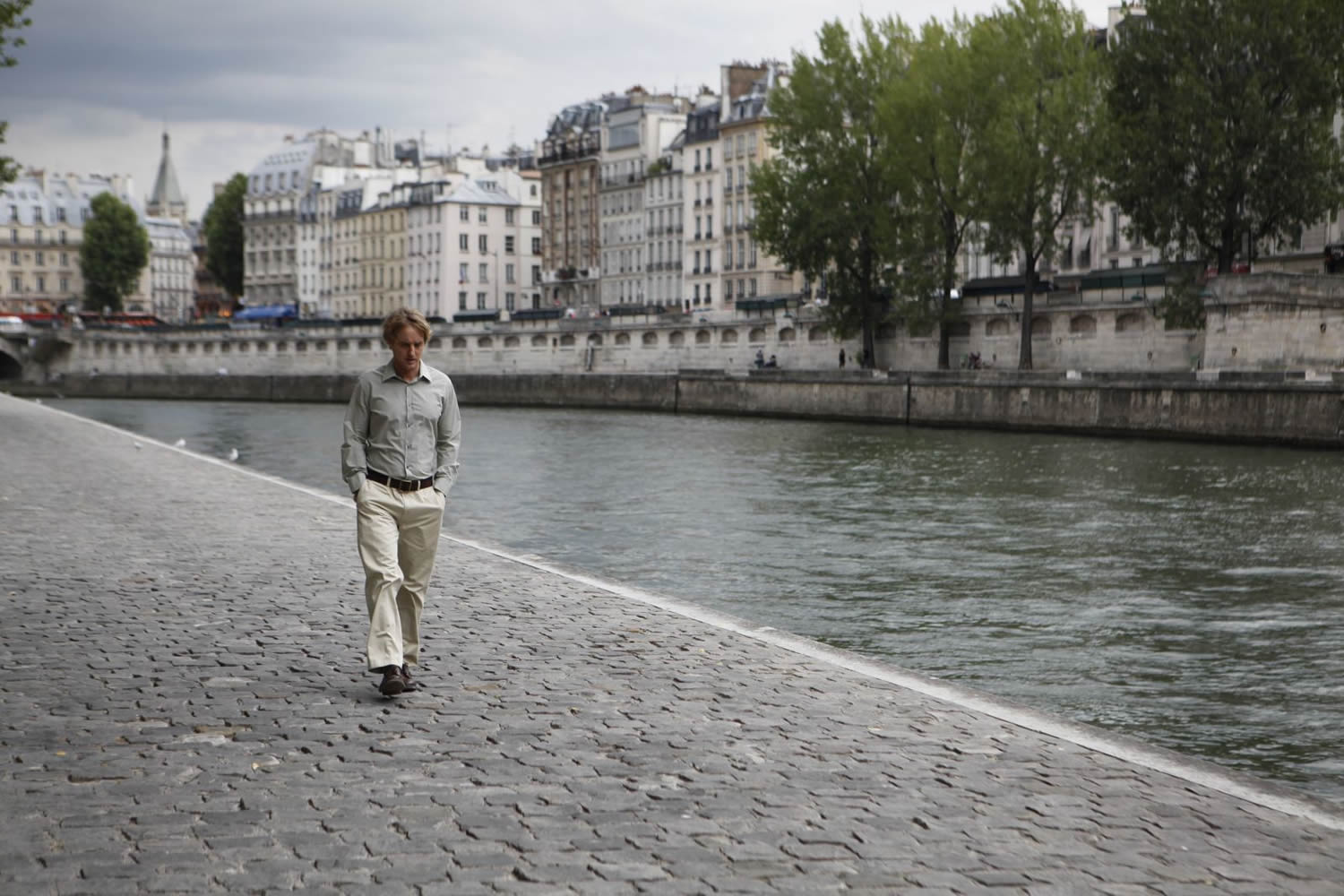

4. Midnight in Paris (Woody Allen)
While insanely prolific and often brilliant, Woody Allen has also become, of late, horribly inconsistent. I am nearly alone in thinking that Midnight in Paris was one of his recent misfires. Yet this was a tiresome romp populated with one-dimensional cartoons of famous artists and writers of yesteryear that never gives us a strong main character to anchor the action (a miscast Owen Wilson is a little too affable and charming to play a Woody Allen stand-in). The premise wears thin quickly. The dialogue is often way too on-the-nose (political discussions between characters of different generations early on ring particularly hollow) and beneath the normally sparkling wit of Allen. This is a movie that wallows too much in its nostalgia for early 20th-century Paris without giving us a convincing modern reality against which to balance this portrait, which SPOILER ALERTS!! . . . (but probably not really) leaves its sentimental ending feeling wholly unearned.

3. Carnage (Roman Polanski)
A shrill, overacted sitcom of a domestic drama about two sets of parents who come together to decide how to proceed when their children have a fight that results in one being injured. With such a fine cast as Kate Winslet, John C. Reilly, Christoph Waltz, and Jodie Foster, one might be excused for expecting a fine ensemble piece that ratchets up the tension and comedy. Instead, Roman Polanski (adapting a stage play by Yasmina Reza) keeps the action static and implausible, with characters saying they want to leave but never leaving and loudly talking on cell phones amidst everyone else. This is a film that never quite figures out how to stop being a play. Even at only 80 minutes, this loud and abrasive affair starts grating on the nerves early on and never lets up.

2. The Devil's Double (Lee Tamahori)
What could have been a revealing account of life behind the fortress walls of Saddam Hussein's (and family's) Iraqi palace--the story of a man hired to act as Uday Hussein's double in public in case of assassination attempts (both Uday and his double are played by Dominic Cooper)--instead becomes a sleazy, by-the-numbers action pic that puts the emphasis on gloss, luxury, and tittilation over elaborating the complex and no doubt more intriguing psychological dynamics of this arrangement. It wallows thoroughly in low-rent mediocrity. What a waste!


1. Sucker Punch (Zack Snyder)
A junky, exploitative, exhaustingly monochromatic, and video game-like (in the worst, most alienating sense of that word) affair that relishes in dull, relentless violence, lifeless CGI, and a faux-female empowerment story. The movie serves up its one-dimensional characters as sweet but decidedly un-nutritious treats for the male gaze, thus further reinforcing the ugly sexual exploitation it pretends to struggle against. It's the audience who becomes the suckers in this vacuous affair. I've been told that the director's cut may offer me something more to chew on, but is it really worth going back into this dismal cinematic world on the off-chance there's only slightly more to it?

20 January 2011

The best films of 2010

2010 might have signalled the start of a new decade, but as for the year in cinema, it was hardly anything fresh or revelatory. There were certainly fewer movies last year than in 2009, or even the two years before that, over which I was absolutely gaga. I know, call me crazy, but I, unlike apparently everyone else on the planet, thought 2009 was absolutely crackerjack. As for the previous year, there were plenty of good films, plenty to admire, but only a few which I would have no hesitation in calling great. This year's list only goes to ten, therefore, unlike last year's, but with ample honourable mentions. Hopefully, it will provide a ray of cinematic sunshine in a year marked, in the news, by a dismal variety of environmental and economic tragedy.

Of course, it's entirely possible that I missed out on quite a few of the year's gems. In the interests of full disclosure, here are some of the films I direly wished I could have seen before diving into this list, but, in the interests of not keeping everyone waiting until about March, had to fall by the wayside: Another Year, Blue Valentine, Carlos, Inside Job, The Illusionist, and Last Train Home. This saddens me as I'm sure some of them would have made the list had I been able to see them in a timely fashion. Sometimes, these lists can be cruel mistresses.


Close calls...

Maybe it's not such a bad year after all if movies as dazzling and enjoyable and otherwise remarkable as these next few don't even make the proper list.

Ajami (Scandar Copti, Yaron Shani), an intense and heart-wrenching exploration of religious and cultural conflict in Tel Aviv, from an intimate perspective.

Despicable Me (Pierre Coffin, Chris Renaud), the year's best, most charming exploration of the lighter side of super-villainy, with a great voice performance from Steve Carell and a lovely, textured, almost Gaelic style of animation to boot.

Fish Tank (Andrea Arnold), the year's most startling coming-of-age story, with a gritty realism in direction and writing that expertly evokes its blue-collar English setting and a revelatory, assured lead performance from newcomer Katie Jarvis.

The Ghost Writer (Roman Polanski), an elegant, stylish, richly characterized, almost effortlessly gripping thriller from a master of tension, who proves he's still more than got it. Of course, the stunning cast, from a deviously smarmy Pierce Brosnan to a quietly intense Ewan McGregor, doesn't hurt either.

I'm Still Here
(Casey Affleck) One of this year's crop of possibly fake documentaries. Viewed from the perspective most had of it when it was released, this portrait of the nearly surreal downfall of Joaquin Phoenix into drugs and dissolution was a dark, bizarrely captivating portrait of Hollywood hubris. Now that it has been revealed as a hoax, it's become a cunning bit of insider satire of the ridiculousness of celebrity.

Scott Pilgrim vs. the World (Edgar Wright), an exuberantly entertaining movie that deftly interweaves the media of film and of graphic novels far more successfully than something like Sin City. Endlessly clever and dazzling, and wickedly well-acted from (who else?) Michael Cera, Jason Schwartzman, Anna Kendrick, Kieran Culkin, and Mary Elizabeth Winstead... although its energy peters out towards the end.

Splice
(Vincenzo Natali), the year's most unfairly overlooked bit of lurid, darkly comedic B-movie fun mixed with smart, serious, high-concept sci-fi. Adrien Brody and Sarah Polley make an incredibly winning team.

True Grit
(Joel and Ethan Coen). While not the year's grittiest or most emotionally involving Western (you'll see), it is a resplendently beautiful and satisfying entertainment, with marvellous performances from Jeff Bridges, Matt Damon, and, most astonishingly of all, Hailee Steinfeld, and snappy writing -- largely based on Charles Portis's novel -- that just about pops off the screen.

The list!

10. Mother (Bong Joon-Ho)
Mother can be called downright Hitchcokian in its suspense, but Bong Joon-Ho's finished product is startlingly new, defying such simplistic descriptions. A mother sets out of a mission of discovery, then maternal protection and crazed revenge, when her mentally challenged son is accused of murder. The cinematography here is gorgeous, and Bong's assured shifts in mood and tone, from the darkly funny to the seriously disturbing, prove mesmerizing. Most amazing of all is the performance of Kim Hye-Ja as the mother, a breathtaking study in maternal affection and delirious obsession. Until Mother, I hadn't seen any of Korean director Bong's previous efforts. On the strength of this dizzying and ever-surprising horror gem, I may have to remedy that.


9. Inception (Christopher Nolan)
So maybe it isn't that great. Does it really all fit together in the end? Do dreams really work that way, with architecture and structure? It may not be the most psychologically probing thriller out there, nor is it quite Christopher Nolan's masterpiece, but Inception is still far more ambitious, imaginative, and engrossing than nearly any big-budget Hollywood feature this year. Rigorously structured and invigorating, Nolan's sure directorial hand keeps us riveted from beginning to end while somehow wrangling all of his numerous Big Ideas into a form that is not only manageable but downright brilliant. As the dream-explorers, Nolan has also wrangled himself a uniformly excellent cast, from Leonardo DiCaprio as the tormented leader of the dream heist, Marion Cotillard, furiously strong-willed as the imagined figments of his wife, Ken Watanabe as the smooth-as-silk corporate backer for the project, and the radiant Ellen Page and the dashing Joseph Gordon-Levitt as DiCaprio's assistants. In terms of emotionally engaging storytelling, Inception is better than such a determinedly heady project as any right to be. In terms of pure style and brainy exhilaration, Inception is downright masterful.

8. 127 Hours (Danny Boyle)
While the eclectic Danny Boyle is hardly a slouch in delievering quality films of wildly varying genres (although Slumdog Millionaire, while initially impressive, seems less remarkable the more I think about it), 127 Hours is his most resonant effort since Trainspotting. Boyle's bursts of cinematic theatrics are well-suited to the true-life story of Aron Ralston, a hiker of boundless energy whose lifestyle gets him trapped by a boulder in a Utah canyon, who then uses this tragedy as a wake-up call and, in his resourcefulness, cuts through his own arm to free himself. James Franco gives a virtuoso performance as Ralston, making us feel his reckless enthusiasm as vividly as his inner demons. Boyle makes the mostly stationary action (after all, the guy is forcibly trapped in one place for nearly the entire duration of the film) thrilling, evoking Ralston's sensory experience (his hunger, thirst, etc.) and his gradual mental deterioration (flashbacks and hallucinations come to dominate his mind), and his eventual capability for grisly, violent determination with mesmerizing style. 127 Hours shows a triumph of the human spirit in the most electrifying sense possible.

7. Animal Kingdom (David Michôd)
A searing Australian crime drama and family saga so brash, meaty, and assured it warrants comparison to Scorsese. Newcomer writer-director David Michôd works with uncommon style and urgency, while at the same time deftly showcasing the balance between family and justice, punishment and loyalty that come to dominate the central Cody family, a pack of wild thugs (none more malicious than its outwardly cheery, inwardly cut-throat matriarch) from Melbourne. Better than Ben Affleck's The Town, Animal Kingdom is evocative of its particular gritty neighbourhood as well as achieving a smart balance between violent criminal outbursts and twisted displays of family bonding. And it features sizzling performances from Ben Mendelsohn, as the most screw-loose, rage-prone member of the family; Guy Pearce, as a gruff and determined cop trying to bring justice to his beat and, perhaps, save some of the more innocent members of the Cody clan from their violent fate; Jacki Weaver, stuning as the wicked den mother; and James Frecheville as 'J,' the young, fresh-faced cub trying to balance his loyalties, exact vengeance of his own, and emerge as a strong survivor.


6. Exit Through the Gift Shop (Banksy)
The shrewdest and funniest of the year's potentially "fake" documentaries, an unintended indictment of the art world, and a pointed commentary on the deceptive, malleable powers of cinema in general. Initially purporting to be Thierry Guetta's never-ending chronicle of the world of street art (or is it just graffitti?), to which the affable, perhaps a bit dim Frenchman was introduced by his cousin, the movie quickly becomes Banksy's chronicle of the rise to (improbable) fame of Guetta. His endless hours of footage prove too much for Guetta, and so Banksy, one of the most legendary of the world's street artists (creator of a Guantanamo-themed blow-up doll at Disneyland and a bent-and-smashed London-style telephone booth), takes control and turns the tables on the supposed director, becoming the story of how Guetta became "Mr. Brainwash," and even got his own well-attended exhibition in swanky digs in L.A. Exit Through the Gift Shop provides irresistible fun and energy while tantalizing us with the question of who is the real subject and who is pulling the strings. It's absurdly hilarious, with some genuinely thought-provoking points to make about art, filmmaking, commodity, integrity, and subjectivity. And thankfully, it's all organized around the tantalizing, cool, anonymous figure of famed, controversial street artist Banksy and his groupie/partner in crime/screw-loose student Guetta. Dizzying, deep entertainment from the most unexpected of sources.

5. A Prophet (Jacques Audiard)
It seems 2010 was the year of riveting, epic crime drama. This is a note-perfect French film about Malik, a young criminal who gets sent away to prison, only to rise through the ranks and re-define himself, painstakingly, as a new breed of crime boss. Targeted initially for his half-Arab roots by César, the Corsican leader of the prison pack, a mafia boss, Malik sneaks his way into César's inner circle and becomes his right-hand man, before his own ambitions rise above the mob boss. Jacques Audiard lets the story speak largely for itself, trading showiness for the real, shocking violence of prison life. (Suffice it to say, if you weren't already wary of accepting oral sex in prison, you certainly will be now.) Audiard takes his time and gives his characters dimensions and motivations that lend uncommon intensity to the story. Tahar Rahim is mesmerizing as Malik, and Niels Arestrup is downright throat-gripping as César, one of the great villains of the year. A Prophet is grounded, meticulous filmmaking, representing a new breed of prison drama that is all the more lively for its calm naturalism.

4. Winter's Bone (Debra Granik)
Debra Granik also uses calm naturalism to intense effect in Winter's Bone. There's no fakery to this tale of poverty and desperation: Ree is a frightfully determined teenage girl facing seemingly insurmountable problems. Her family -- a younger brother and sister and their mentally ill mother -- will lose their home if Ree doesn't track down her father, a fugitive meth dealer who has seemingly skipped town after promising the house as collateral on a bail bond. Jennifer Lawrence is the big discovery here, imbuing Ree with uncommon intelligence, heart, and determination. It's a fierce, radiant performance that haunts the memory long after the lights come up. But director and co-writer Granik's most remarkable achievement is using her realistic approach to create a magnificent sense of hard-scrabble community, using real settings and real locals to tell her uniquely Ozark story. John Hawkes is also mesmerizing as Teardrop, a scary-druggie relative who pushes Ree away only to come to her aid. Winter's Bone is an unflinching, achingly moving, strangely beautiful all-American story.


3. The Kids Are All Right (Lisa Cholodenko)
A funny, bright, heart-warming, sexy film that's also one of the most perceptive films about family (gay or straight) to come around in a long while -- The Kids Are All Right hits all the right notes. Lisa Cholodenko's film could easily have wound up as excessively colourful or indie-clichéd, but the energy and humour she brings to the proceedings is infectious. Annette Bening is Nic, a harried doctor with a quick wit and a habit of hitting the bottle a little too hard to soften her hard edges. She's married to Jules (Julianne Moore), a flighty woman wandering between jobs (her current project is as a landscape designer). Their children, Joni (Mia Wasikowska), a bright student crumbling under the weight of expectations, and Laser (Josh Hutcherson), a curious teenager, become fascinated with meeting their birth father. Their search leads them to Paul (Mark Ruffalo), a hip, almost improbably easygoing restaurateur.

This sunny film marches along with confidence, erasing the blunt quirkiness of its subject matter (a gay couple! with a dysfunctional, patched-together family! oh my!) and letting its characters breathe and the story unfold naturally. Cholodenko's direction is so assured here that it makes the movie's wise observations about family life and its snappy humour seem practically effortless. The screenplay, from Cholodenko and Stuart Blumberg, is smart and detailed, allowing the cast room to bring their characters to life. And that cast is downright sublime. Bening is marvelous as Nic, making her a woman in tune with her faults and complexities, and with a strong will and confidence that is downright inspiring -- it's a wonderful match of star to character. Moore is equally confident and sexy, with an easygoing aura and a sharp comedic timing. Ruffalo gives some of his best work to date as Paul (his scruffy charm has never fit this well), and Wasikowska, barely notable at all in Alice in Wonderland, is downright radiant here. The Kids Are All Right is more than alright -- it's damn near perfect.

2. The Social Network (David Fincher)
David Fincher's latest (his most accomplished work to date) is a timely drama about the genesis of Facebook full of such technical, brainy dazzle that it practically rewires your senses. It's therefore a shrewd match of form to content: after all, Facebook has rewritten not only the rules of the internet, but changed the very way we interact with each other. From first frame to last, The Social Network is a film simply brimming with zesty talk and twisty human interaction -- it's a complex thriller that's also a bold statement on the way we live now. And it's such a layered drama that it may take more than one viewing to truly absorb its nuances. Indeed, it's easy to take Fincher's casual genius for granted here, as I did, to some extent, before watching it again. But genius it is, and a particularly spiky and durable form of genius, at that.

Jesse Eisenberg gives an electrifying performance, easily one of the best of the year, as Mark Zuckerberg, the anti-social jerk-genius who founded Facebook -- or did he have some (uncredited) help? Certainly that is what his Harvard colleagues Tyler and Cameron Winklevoss (identical twins both played with a hilarious air of smarmy entitlement by Armie Hammer) claim. Zuckerberg's best friend Eduardo Saverin (a wonderfully sincere Andrew Garfield) is also suing him for bilking him out of his share of stock in Facebook. A final key player is Sean Parker (a -- and I never thought I'd type these words -- gripping and entertaining Justin Timberlake), the founder of Napster who sallies his way into Zuckerberg's inner circle and wrests some control of the project for himself. The dramatic question is whether or not Zuckerberg screwed over his friends, ironically, in producing a website designed for connecting with friends, and, of course, what led him to this idea.

Fincher stages bravura scenes here that add up to more than the sum of the parts -- at times, it might almost be a Citizen Kane for the digital age, albeit with a disgruntled ex-girlfriend instead of a sled. The performances are endlessly surprising and layered, delivering Aaron Sorkin's rich, whip-smart dialogue at breathless pace. The score, from Trent Reznor (of all people) and Atticus Ross, subtly but noticably underlines the proceedings with similar briskness. The technical elements work together brilliantly, but more importantly, they highlight and deepen the story. The Social Network is grand entertainment, a magnificent triumph of form and content that may come to define the new generation and set a tone for a new brand of filmmaking.


1. Toy Story 3 (Lee Unkrich)
If The Social Network is the timeliest film of the year, Toy Story 3 may just prove the most timeless. If I were voting with my brian, and maybe my gut, I might have easily put The Social Network at the very tip-top of this list. But I went with my heart, and my heart loved Toy Story 3 without bounds. And even amidst massive amounts of anticipation -- Toy Story and Toy Story 2 are such enduring classics that their legacy is all but untouchable -- and even more massive amounts of doubt -- Pixar may be able to pull off a sequel, but a three-quel? And not only that, but a three-quel to some of the most perfect (read: self-contained and self-sufficient) films of this generation? -- Toy Story 3 stands tall. No movie this year drew more knowing laughs, rollicking excitement, and meaningul tears than this wonderful finale of the Pixar saga about the secret lives of a child's playthings. No movie this year featured characters as identifiable in situations so intense, heart-warming, and imaginative.

Andy has grown up and is about to leave for college. The toys, who have long been relegated to an old treasure chest, will wind up either with Andy, in the attic, in the trash, or at a day care centre. After some close calls, the gang wind up at Sunnyside, seemingly a dream come true, as they will be played with day in and day out by dozens of eager new children. But there's a dark side: Lotso (a delightful Ned Beatty), a purple teddy bear with a charming Southern drawl masking his fascist tendencies, the leader of the Sunnyside toys (which also include Ken [a hilarious Michael Keaton], who has a fateful run-in with Barbie), keeps Woody and the gang in the room with the younger, more violent and destructive children, and keeps the place locked down at night. Toy Story 3 then becomes a daring escape adventure as thrilling as anything in The Great Escape, as the gang must struggle to break free of the prison-like day care and return to Andy, even if it means life in the attic.

Toy Story 3 is delightful and antically original in the early at-home scenes and the Sunnyside scenes, with old favourites like Tom Hanks and Tim Allen gamely providing the voices for Woody and Buzz once again. As it reaches its dazzling conclusion, however, it becomes almost elegiac, as the toys must face their own obsolescence. A final scene *obvious spoiler alerts ahead* featuring Andy giving the toys over to a much younger neighbourhood girl is a joyous and wonderfully touching moment of passing the torch -- of saying goodbye to the glory of old and greeting a new era full of promise. And it works like clockwork both from Andy's perspective and from the toys. Toy Story 3 is funny, thoughtful, adventurous, exciting, imaginative, visually eye-popping, and vividly touching entertainment -- so layered with real-life meaning (rife with wisdom about growing old, reaching out, living up to expectations, staying loyal and saying goodbye) that it may captivate adults even more than children. In cinematic terms, it really does go to infinity and beyond.

-----
The worst films of the year

And now for something completely different: These are the worst films I had the displeasure of seeing from last year. Now, once again, I'm the type of guy who goes out of his way to avoid the true stinkers, and I've got a rather good nose for them at this point, so there are probably worse movies out there than these (well, not worse than #1, which was downright abominable... but we'll get to that). And I'm only doing four this year, because, well, I don't feel like wasting space on more than four of these lemons. With that out of the way, these are the films from last year that most made me want to throw up my hands in frustration...

4. Legion (Scott Charles Stewart)
A dead-in-the-water January release that is an insult to the month of January with its sheer dreary laziness. The apocalypse has rarely felt less urgent than it did here, and despite an enjoyably blasphemous premise of angels descending to earth to wipe out humanity, which has apparently fallen out of God's favour, the movie never really takes off and ends in the most muddled way possible. Paul Bettany and Dennis Quaid somehow got suckered into appearing in this, and while Quaid is quite pointless, Bettany isn't too terrible, so that's... something?

3. Robin Hood (Ridley Scott)
Well, it's safe to say that Errol Flynn, the dashing star of The Adventures of Robin Hood, one of the most lovely movies of all time, has never been so thoroughly crapped upon as he has by this movie. It's a long way from the joyous and charming merry-making of the '30s Technicolor era, folks. Scott's historical epic aimed to be a truer portrait of the legendary outlaw Robin Hood, but simply wound up being a duller, greyer affair (literally, that's pretty much the only colour they seemed to have used in shooting the movie) that saps the figure of both his mythos and his appeal. Russell Crowe slogs his way grumpily through this mess like a fly trapped in molasses.

2. Cop Out (Kevin Smith)
Kevin Smith, a filmmaker widely renowned as a better writer than a director, directs someone else's hackneyed script (Robb and Mark Cullen). The result, as expected, is a visually bland and tiresomely written affair that manages to deflate even the resiliently energetic, bug-eyed comedian Tracy Morgan and leaves Bruce Willis floating in the wind. Also, it's oddly long for such a small concept, adding excess to injury.


1. The Last Airbender (M. Night Shyamalan)
It's finally happened. The Last Airbender is the absolute nadir of M. Night Shyamalan's decline in status as a director, a master class in wrong-headed, incompetent filmmaking. All sense of pacing, intelligent, unmechanical writing, consistency, exciting action, visual splendour, and even racial sensitivity (some of the characters from the original Nickelodeon series, upon which this bombastic misfire is based, have somehow arbitrarily changed races) falls by the wayside in Shyamalan's quest to find the perfect storm of cinematic awfulness. On its own, its a towering achievement in incompetence. After viewing some of the quite solidly constucted series upon which it is based, this abomination is downright insulting and mystifying.

17 January 2011

Blasts from the past!

For a slice of perspective in anticipation of my forthcoming best films of 2010 list (don't worry, it'll be here soon, my pets), I decided to drudge up some of my old "best-of-the-year" lists from my old haunts at Rotten Tomatoes, posted now here for your enjoyment. Some caveats: As the lists get older, they probably reflect my current feelings less and less (meaning it's possible that I could thoroughly disagree with my 2003 list if I were to watch them all again). A recent viewing of Caché has also shifted around my 2005 list from what it originally was. But if you're in the mood for some intriguing curios from my movie-going past and enjoy a good list, press on...

Best films of 2008

10. The Class (Laurent Cantet)
9. Still Life (Zhang Ke Jia)
8. Wendy and Lucy (Kelly Reichardt)
7. My Winnipeg (Guy Maddin)
6. Waltz With Bashir (Ari Folman)
5. Milk (Gus Van Sant)
4. Synecdoche, New York (Charlie Kaufman)
3. The Dark Knight (Christopher Nolan)
2. Rachel Getting Married (Jonathan Demme)
1. WALL-E (Andrew Stanton)


Best films of 2007

10. No End in Sight (Charles Ferguson)
9. Zodiac (David Fincher)
8. 4 Weeks, 3 Months & 2 Days (Cristian Mungiu)
7. The Assassination of Jesse James by the Coward Robert Ford (Andrew Dominik)
6. I'm Not There (Todd Haynes)
5. Juno (Jason Reitman)
4. Once (John Carney)
3. Persepolis (Vincent Paronnaud, Marjane Satrapi)
2. No Country for Old Men (Joel & Ethan Coen)
1. There Will Be Blood (Paul Thomas Anderson)


Best films of 2006

10. Old Joy (Kelly Reichardt)
9. The Death of Mr. Lazarescu (Cristi Puiu)
8. United 93 (Paul Greengrass)
7. Half Nelson (Ryan Fleck)
6. Casino Royale (Martin Campbell)
5. The Departed (Martin Scorsese)
4. Borat (Larry Charles)
3. Children of Men (Alfonso Cuarón)
2. Pan's Labyrinth (Guillermo Del Toro)
1. Letters From Iwo Jima (Clint Eastwood)


Best films of 2005

10. Nobody Knows (Hirokazu Koreeda)
9. 2046 (Kar Wai Wong)
8. Me and You and Everyone We Know (Miranda July)
7. Broken Flowers (Jim Jarmusch)
6. Murderball (Henry Alex Rubin, Dana Adam Shapiro)
5. Brokeback Mountain (Ang Lee)
4. King Kong (Peter Jackson)
3. A History of Violence (David Cronenberg)
2. The Best of Youth (Marco Tullio Giordana)
1. Caché (Michael Haneke)


Best films of 2004

10. Osama (Siddiq Barmak)
9. Moolaadé (Ousmane Sembene)
8. Before Sunset (Richard Linklater)
7. The Aviator (Martin Scorsese)
6. Million Dollar Baby (Clint Eastwood)
5. Maria Full of Grace (Joshua Marston)
4. The Incredibles (Brad Bird)
3. Eternal Sunshine of the Spotless Mind (Michel Gondry)
2. Kill Bill - Vol. 2 (Quentin Tarantino)
1. Sideways (Alexander Payne)


Best films of 2003

10. All the Real Girls (David Gordon Green)
9. The Man Without a Past (Aki Kaurismaki)
8. The Fog of War (Errol Morris)
7. Kill Bill - Vol. 1 (Quentin Tarantino)
6. Master and Commander: The Far Side of the World (Peter Weir)
5. Finding Nemo (Andrew Stanton, Lee Unkrich)
4. American Splendor (Shari Springer Berman, Robert Pulcini)
3. Lost in Translation (Sofia Coppola)
2. Mystic River (Clint Eastwood)
1. The Lord of the Rings: The Return of the King (Peter Jackson)


I hope that will sate your list hunger until I post last year's list, hopefully by the end of this week, almost definitely by the end of the month.

25 February 2010

Some late additions

Isn't it always the way? You think you've seen enough movies to make your list and then a couple days and weeks later, you stumble across a few new movies so good that they beg to be included as well. Well, that's how it happened with me, and suffice it to say, it's been a damn good week or so of movie watching. Rather than edit the list, I'll give you some write-ups right here of the films I would subsequently include on the list along with their approximate position (3a would be between 3 and 4 on the original list, etc.). And since there's three of them, that brings the 2009 list up to an even 20, which is a much better number than 17 anyway! Silver linings and all that. Happy movie-going!


3a. Two Lovers
Even considering the praise that has been lavished on James Gray's '70s-style, grittily realistic romance, it's still somehow been vastly underrated... or maybe it was just under-recognized by me, before now. Whatever the case, I can't overstate the poetic, atmospheric beauty nor the piercing honesty and the appropriately anachronistic and detailed expression of pure humanity on display in this stunning film. Leonard Kraditor (Joaquin Phoenix) is a depressive, mildly unstable man with past baggage of heartbreak, first seen engaging in a feeble suicide attempt. Working with his fairly Orthodox Jewish parents (Moni Moshonov and Isabella Rossellini, both engaging in a careful balancing act between light-hearted caricature and tender empathy) at their family dry-cleaning business, he soon comes across two women who become possible suitors. His parents want to set him up with Sandra Cohen (Vinessa Shaw), the beautiful, smart, and sensitive daughter of another Jewish family who is in the process of taking over their business -- it would seem like a logical match. But Leonard randomly comes across a ravishing, sprightly, but equally damaged (she has a history of drug abuse) new neighbour, Michelle (a radiant and powerful Gwyneth Paltrow), and falls hard for her, and she, somewhat, for him, despite being intermittently involved with a wealthy married man (Elias Koteas).

None of this is overstated -- not the meet-cute between Michelle and Leonard, or the urges and day-to-day lives of Leonard's parents, or Michelle's dealings with her boyfriend, or any of the complications or tragedies that ensue later on -- and so Gray achieves an almost miraculous balancing act, drawing out feelings of tension, passion, disorientation, loyalty, and the always near-incomprehensible machinations of the human heart. It's one of the most startlingly real, carefully and elegantly staged romances since Before Sunset, with a lovely, dialogue and moment-based script to boot. But I'm trying to fit it into a model, which is wrong, since the film is also wonderfully unpredictable. And least predictable of all -- except maybe to those paying close attention to the actor -- is the revelatory power of Joaquin Phoenix's lead performance, nearly Brandoesque in its astonishing intensity and heartbreaking empathy. Not to be outdone, Paltrow also gives one of the most marvelous performances of her already distinguished career. Two Lovers is not only a hopeful yet complex look at love, but about life, and it's a rare film that thrills and moves you by doing little more than presenting its particular characters and letting them interact, breathe, grow, learn, and live.


13a. Bright Star
A ravishing period piece romance that's also a relatively intelligent and compelling look at fashion, literature, and the place of women in history -- and way more snappy, fun, and luxuriously moving than that lame description could suggest. Jane Campion provides not only luscious and impeccable visual design -- my God, those costumes! -- but a sharp eye for character detail and the larger implications of her story, connecting the particular to the universal. It helps that she has a wonderful, natural talent in the beautiful Abbie Cornish -- as Fannie Brawne, the higher-class, fashion-designing lover of 19th century English poet John Keats -- and a pitch-perfect match for her in Ben Whishaw as Keats as well as a great sparring partner for her in Paul Schneider as Charles Armitage Brown, Keats's loyal friend and confidante who disapproves of his friend's romantic choice. Witty, well-crafted dialogue is shared among all three and the film moves across its familiar story beats with seamless, exuberant ease and more thematic and narrative heft than one might expect. An emotionally, intellectually, and visually sparkling gem of a film.


17a. Big Fan
Might actually be 15a. Who knows? Anyhow, this is an oddly underlooked look at unbridled all-American sports mania from The Wrestler screenwriter Robert Siegel, making his remarkably assured directing and comedic debut. Basically a darkly funny character study of parking garage attendant and die-hard New York Giants fan Paul Aufiero (Patton Oswalt, a reliable TV comedy side player making a great lead performance here, carefully modulating anger, self-righteousness, and intensity), a regular contributor to late-night sports radio call-in shows who undergoes a (possibly deserved) humiliation at the hands of his favourite team's quarterback as well as his frequent on-air rival Philadelphia Phil (Michael Rappaport). But in the underdog spirit of America, this only strengthens Paul from Staten Island's determination to support his team, no matter what the cost to his body or his sanity. Oswalt is well-supported by Kevin Corrigan as his best buddy at the big games and the various actors playing his flabbergasted family. Siegel alternates tone well between darkness and light, nails the details of his hero's life, and brings it in to the end zone to score a touchdown of a hilarious point about not only sports obsession but a culture in which we define ourselves based solely (crazily) on what we support. Not afraid to go to some risky, but true in their context, places for laughs, Siegel makes this one of the sharpest and most outrageous satires of the year -- along with the equally under-appreciated Observe and Report.

13 February 2010

The best films of 2009 (at long last)

Well, I've finally seen enough movies from last year -- and then some! -- to, I believe, justify a reasonably comprehensive 'best of the year' list. A bit of a twist this year: it'll be a top-17 list instead of a top-10. There was just too much stuff I wanted to talk about from this year, like The Road and Inglourious Basterds as just a few spoilerific examples, for me to be comfortable narrowing it down to just 10. But before you chastise me for such a random, arbitrary number, I have precedent for it in the form of Glenn Kenny.

Regrettable omissions are of course the bane of my existence, and some of the big movies I have not yet had the chance to see from last year that I very much wanted to are Bright Star, A Single Man, Invictus, The White Ribbon (although after the abomination that was Funny Games, my desire to rush out to see another Michael Haneke film has cooled considerably), and Tokyo Sonata. And if I do like any of those to any great degree, I can just tack them on the end of the list here, or label them #10a. or something. Hooray for the flexibility of blogging! And I have seen Avatar, for the record... it just flat-out didn`t make the list. But enough about the caveats. Let's do this thang.

Some sad exclusions (a.k.a. honourable mentions):
The Princess and the Frog
, a charming, beautiful, smart, funny, incredibly successful rejuvenation of the old-school Disney aesthetic.
Drag Me to Hell, Sam Raimi's cheesy-scary-giddily fun throwback to the Evil Dead era.
I Love You, Man, the deliriously funny, sharply observant, enjoyably tender 'bromance' that the scatter-shot The Hangover wanted to be... although I still liked The Hangover a wee bit as well. And it featured a cameo by Rush! (Glee!)
Adventureland, a not-quite-tonally-perfect but lovely and heartfelt movie (with endearing performances from Jesse Eisenberg and Twi-gal Kristen Stewart) that does for the '80s what Dazed and Confused did for the '70s and American Graffiti did for the dawn of the '60s.
The Limits of Control, which was kind of a lot further away from this list than those others, but which deserves as much mention as I can possibly give it for being the most underrated, surprisingly mesmerizing artsy effort of last year.

The list proper:

17. Coraline
Visually eye-popping, dazzling and tense and surreal and scary all at once, this is possibly Henry Selick's most accomplished effort yet. (I can already hear the cries of protest from the die-hard Nightmare Before Christmas fans.) Of course, he's helped greatly by Neil Gaiman, the virtuoso inventor whose book he sublimely adapts here. The animation is as exquisite as the sense of imagination and the emotional impact, and it's all buoyed by a rousing voice cast including Dakota Fanning, Teri Hatcher, and the spookily good John Hodgman -- yep, the PC guy from the Mac ads.

16. Everlasting Moments
A wistful and moving Swedish import far more sturdily built than anything from IKEA. A wonderful, almost Ibsen-like family drama set at the turn-of-the-20th-century, the period setting is exquisitely well captured by director Jan Troell. The film, appropriately enough considering its story is about a woman who gains strength and feminine identity through her experiments with a camera she won in a lottery, often has the burnished look of an old, faded photograph. Troell proves observant, tough, and empathetic in capturing the family's moments together (although I found the father, as character and as performed, a bit bland), as well as those between the camera-toting mother and the kind old owner of the photography shop down the street. An emotional, elegant film with a fantastic, wise lead performance from Maria Heiskanen.

15. Observe and Report
The part of the list where you point fingers and call me crazy. Bah. This is a love-it-or-hate-it film of the highest order, and I'm fully on the love-it side. An all-out, darkly (even bleakly) comedic send-up of Taxi Driver and all-American earnestness, the movie (about a big-dreaming mall cop and a lewd shopping mall flasher and the havoc that results) lets Seth Rogen unleash his angry side, and it looks good on the big lug. Observe and Report also boasts propulsively funny turns from Anna Faris (as a drunken perfume counter bimbo), Ray Liotta (pitch-perfectly hammy as a self-serious cop), and Celia Weston as the mother with all the right advice. Either you go along with its outrageous energy, culminating in a ridiculously violent climax, or you find it repellently offensive. Me, I found it one of the most energetic, pointed, daring comedies of recent memory, more than worthy of comparison to Tropic Thunder or Borat.

14. In the Loop
Speaking of classic comedy, Armando Iannucci's sparkling, effortlessly witty, fast-talking political satire is like The West Wing meets... some kind of crazy, Fawlty Towers-esque British sitcom. Uniformly well-acted from a cast of largely unknown (at least on this side of the pond) British actors and, for good measure, James Gandolfini as a tough-looking, sceptical American general, the movie is briskly entertaining and sharp from beginning to end. Best of all is Peter Capaldi as a foul-mouthed, apoplectic, cell phone-toting PR guy for the British folks in charge.


13. Inglourious Basterds
Another viewing and this likely could have cracked the top-10. As it is, I found it a raucous, slightly imperfect and questionable WWII romp from Quentin Tarantino that was far more blisteringly fun than any film bearing that description has any right being. Brad Pitt is of course the biggest star in this Nazi revenge fantasia-as-meta-cinematic commentary, and he affects an unreasonably entertaining faux-Southern accent as Aldo Raine, who wants his scalps. Even more richly entertaining, though, are Melanie Laurent, radiant, impassioned, and stirring, with a bona fide feminist vivacity, as Shosanna Dreyfus, the only surviving member of a French Jewish family bent on revenge, movie-style, and Christoph Waltz as Col. Hans Landa, the Jew Hunter, so gleefully intense he just about singes the edges of the screen. Tarantino could have laid on the action thick here, and what of it there is is thoroughly fun and engaging, but this is at is core a movie drenched in impossibly well-staged dialogue, whether it be Landa's throat-gripping opening interrogation or a later basement card game scene almost hypnotic in its tension. And of course it all wraps up with a quintessential Tarantino image of cinema as diabolically effective revisionist history, of movies as imagination, emotional conduit, and savior. So sit in the dark and enjoy.

12. Food, Inc.
A comprehensive, sleekly mounted, fitfully engaging, and downright shocking documentary about what we eat and the disparity between what we think it is and what really goes on behind the scenes of its production. Robert Kenner draws upon the research of Eric Schlosser (Fast Food Nation) and Michael Pollan to draw us into some of the deeper corners of the food industry. Most damning of all is Kenner's indictment of Monsanto, which has by now all but monopolized corn production in the US thanks to its patent on genetically modified seeds; but the film covers such a broad spectrum of food-related horrors, from the ground up, and Kenner packs it so full of revealing interviews and startling information, that it will definitely make you think twice about what you eat for your next meal.


11. The Road
Bad timing is really the only reason I can see for this elegant, heartbreaking film not getting its due as a worthy follow-up to that Cormac McCarthy adaptation of 2007, No Country for Old Men -- a startling film, and one of the best of the decade. John Hillcoat, the master of art-directed atmosphere who helmed The Proposition, reaffirms that reputation here: The Road immerses us in a vividly desolate, bleakly stunning, utterly authentic post-apocalyptic landscape. It also achieves a quietly mesmerizing alternation between McCarthy's terse dialogue and mesmerizing silence, punctuated by Nick Cave's haunting piano score. Aesthetically wonderful, the movie also proves once again what a towering actor Viggo Mortensen is while also featuring a great, heartfelt breakout performance from Kodi Smit-McPhee. Despairing enough to be true to McCarthy's work but also honestly emotional and hopeful enough to be moving when it needs to be, this work may be a bit too stuffy/fussy at times to completely live up to the Coen Brothers' masterpiece, but it is still an absolutely stunning post-apocalyptic tragedy.

10. Up
Yet another astonishing animated film in a sterling year for animation. Up is just further proof of Pixar`s seamless genius in telling original stories with emotional weight, witty humour, and increasingly dazzling visual beauty. Starting with a quietly poignant, perceptive, and heart-tugging opening montage of childhood enthusiasm slowly turning to mid-life acceptance and disappointment of dreams dashed, the movie quickly dives into the jubilant tale of cranky old widower and former balloon salesman Carl Fredericksen (wryly voiced by Ed Asner), finally realizing his childhood ambition of flying to mythical Paradise Falls in South America by attaching thousands of balloons to his rickety old house and hitting the skies. Faced with an unexpected stowaway, a friendly talking dog, and a betrayal by his childhood hero (silkily voiced by Christopher Plummer), Up becomes a buoyant tale of both nostalgia and new-found friendships and goals in life. If the humour is a little bit more juvenile and inconsistent than some of Pixar`s best -- like WALL-E or The Incredibles -- it`s still one of the most purely entertaining, colourful, wistful, and profound films of the year.


9. Fantastic Mr. Fox
A wildly inventive animated caper that recalls the sheer madcap joy of Wallace & Gromit and allows the notoriously style-oriented director Wes Anderson to more fully and intricately construct his cinematic world, Fantastic Mr. Fox is also smart as, well, a fox. Not just about the wondrously conceived details of its quirky landscape -- the action takes place in a meadow replete with foxes, weasels, moles, and even wolves, railing against the tyranny of local farmers Boggis, Bunce, and Bean -- or the ingeniously complicated logistics of Mr. Fox`s climactic heist, but about the shrinking expectations of middle age, family, competition, and the little thrills in life that you have to reach out and grab before they disappear. George Clooney, in his other pitch-perfect performance of the year, is appropriately wily and charismatic as Mr. Fox, and the movie is blessed as well with the vocal talents of Meryl Streep as his doubting-yet-loyal wife, and Anderson staples like Jason Schwartzman, Owen Wilson, and Bill Murray. A tender, heartfelt family drama, a work of stop-motion art of exquisite, hand-crafted beauty, and also a blissfully entertaining, madcap, high-stakes heist flick all wrapped up in one? I'll be cussed if Anderson doesn't pull all that off and, in the process, arrive at one of his most accomplished efforts yet.

8. District 9
Easily the sci-fi film of the year in a year that boasted stiff competition in the category from such variously dazzling efforts as Star Trek, Moon, and Avatar. This is a boldly original, thoroughly satisfying compilation that combines the pointed social/political satirical implications of an alien spaceship stalling out over Johannesburg, South Africa and being forced by the locals into slum-like townships with intensely involving character study of Wikus Van De Merwe (Sharlto Copley), a weaselly corporate stooge involved in the alien relocation who accidentally comes into contact with some DNA-altering alien technology with action scenes as viscerally stirring as anything this year (on a budget that was about as big as the catering cost for Avatar). It also combines an urgent documentary approach with a more fittingly panoramic scale as the stakes and the tensions mount. South African director Neil Blomkamp, with his focused, brainy direction, has delivered an ideal summer-time entertainment, boasting busy and ingenious brain as well as efficiently muscular brawn, not to mention a poignant bit of heart regarding human-alien identification... but subtly, without ever getting as preachy as Avatar. Great, meaty late summer entertainment.

7. (500) Days of Summer
(500) Days of Summer features the sliest romantic comedy gimmick of the year -- telling its story, which unfolds over, of course, 500 days, in iPod Shuffle fashion, with moments of meet-cute, first make-out, first argument, first night of sex, post-break-up despair, playfully seductive IKEA shopping, and the most joyously inspired and random musical number of the years (set to Hall & Oates's "You Make My Dreams") all jostling for our avid attention. That alone puts it head and shoulders above any of the thousands of run-of-the-mill cookie-cutter rom-coms that currently infest the multiplexes. But director Marc Webb does us one better by infusing his movie with a sense of pointed observation about relationships underlined by a rueful and breezily romantic heart. Although on second viewing, I did find the secondary characters as overly cutesy as the film's detractors found, the film succeeds in spite of all this thanks to Webb's balanced staging of romance and melancholia as well as the absolutely wonderful, lived-in performances of Joseph Gordon-Levitt as Tom, the earnest young hero (with architectural aspirations), and the radiant Zooey Deschanel as Summer, the exquisite, playful, but self-possessed and just-out-of-reach object of his undying affections. Deschanel in particular makes you believe Summer as the girl every man wants, especially (and ironically) when they discover they can't quite have her (or maybe I've just developed a bit of a celebrity crush on Deschanel... entirely possible). (500) Days of Summer is the most blissful and original (anti-)romance of the year, as endearingly quirky and perceptive, in its way, as Annie Hall and with echoes, too, of Eternal Sunshine of the Spotless Mind, and, with its brilliant rooftop party scene, a virtuoso rumination on the image and reality of love.


6. Where the Wild Things Are
Beautiful, startlingly original, even breathtakingly moving in its best moments, Where the Wild Things Are is a miraculous, expansive adaptation of a tiny, cherished children's book by Maurice Sendak. Somehow, director Spike Jonze and his co-screenwriter Dave Eggers have crafted a psychologically complex but easy-to-follow, deeply characterized and visually -- even aurally, with the haunting music of Karen O included during the journey -- stunning little fantasy that's also a deep rumination on childhood imagination, fear, anger, and wonder. (Catherine Keener does a good job in a small role as the weary, divorced mother to Max, the real child and wild thing from whose eyes the movie unfolds.) Embodying Max's ideals, figments, worries, and dreams, the Wild Things he comes across after running away from home and boarding a boat to a far-away, subconscious land of make-believe are brought to vivid life. This is due not only to the roughly enchanting costumes and make-up but to the performances of Paul Dano, Catherine O'Hara, Forest Whitaker, and, especially, James Gandolfini in a towering, scary-sensitive performance as lead Wild Thing Carol. And at the centre of it all, Max Records is a tenderly earnest, natural revelation as our rebellious hero Max. Some found it too depressing -- I admired Jonze's refusal to sugar-coat any of the darker aspects of the story and his simultaneously ringing endorsement for emotional reconciliation at journey's end. Some thought it looked gloomy -- I found the combination of light and dark, dreamy and earthy, in both visual look and emotional tone, to be just about perfect. A bright gem of a children's film that trusts in the intelligence of its audience, both young and old.

5. A Serious Man
Possibly the most audacious, free-wheeling, ambitious-yet-personal film of the year -- a colleague, Nathaniel Tensen, had it right comparing it to last year's Synecdoche, New York. Similarly, this is a film that's initially hard to swallow at points (especially that abrupt, offbeat ending), but that only grows in stature upon further reflection. It's the first film from Joel and Ethan Coen that can be counted as genuinely personal, taking part in a '60s-era, Midwest city like that of their childhood, and dealing explicitly and in complicated fashion with their Jewish roots -- but like many Coen joints, the sense of satire and almost fetishistic surface detail is overwhelming here, almost (but not quite) to the point where it can be called stereotypical. It's also one of the few films that can combine serious Biblical allegory (think the Book of Job) with mundane domestic drama, character study, and quintessentially '60s tropes of pot and rock and roll (a Jefferson Airplane song may feature the key to unraveling the film's mysteries). Finally it combines the Coens' more serious, existential mode (see No Country for Old Men... again) with their outrageously silly social satire mode (the best example being the underrated Burn After Reading) to seamless, rewarding effect.

Bold, fevered, and frankly astonishing, A Serious Man is like nothing else this year. Michael Stuhlbarg gives a mesmerizing, slow-burn performance as harried physics professor Larry Gopnik, a seemingly average, serious man for whom everything seems to be going increasingly wrong -- to the point that he starts suffering from a nightmarish crisis of faith and existence and seeks out Rabbinic intervention. The whole cast does stellar work, in fact, under the controlled direction of the Coens (Richard Kind and Frank Melamed are stand-outs). A rare glimpse at some weighty personal subject matter for the directors, A Serious Man starts off with a humourous but eerie Yiddish parable and spirals down into the existential suburban abyss before ending with a true American apocalyptic vision. Profoundly cool. I suspect it will only prove more daring and effective with subsequent reflection and viewings. (I almost toyed with the idea of it as my #1.) As it is, it is more than worthy of being placed alongside No Country for Old Men, Fargo, and Blood Simple as the brothers' best.


4. The Hurt Locker
Kathryn Bigelow does a seamless job of placing us in the shoes of someone with an almost impossibly nerve-rattling job with the original, intimate, and constantly intense war movie The Hurt Locker. The film zooms in on the daily ins and outs of a bomb disposal specialist -- knowing which wire to cut; trying to figure out if there are backup bombs and detonators; marching with a heavy, hot explosion-proof suit through sweltering Iraqi city streets into likely death; trying vigourously to disarm an unwilling suicide bomber whose explosives may be timer-activated; and trying to determine whether the guy on the cell phone down the street or up on that rooftop is calling a friend or activating a detonator. And with such focus, she blows stereotypes of war, action, gung-ho patriotism, and masculine cool and camaraderie and careerism right out of the water. Nothing is familiar or comfortable here; the stakes feel viscerally real, and each moment in the film could spell death for the characters. Mark Boal's script, informed from his days out in the battlefield as a journalist, helps make everything appear vividly real. Bigelow proceeds at a deliberate, exacting pace, with each new scene completely, dizzyingly different than the last and yet building on the knowledge and fear of what came before.

As the central daredevil, Col. James, Jeremy Renner memorably employs a charismatic swagger and an almost Zen-like grace under pressure that makes you wonder whether his character is purposefully crazy and reckless or whether his hotheaded nature is the only natural response to this insane line of work. He's brilliantly backed up by Anthony Mackie as his methodical look-out man who begins to question his superior's unorthodox techniques, as well as Guy Pearce and Ralph Fiennes in a pair of stunning cameos. "War is a drug," we are informed by a title at the beginning of the film, and indeed it is for Col. James -- with all the adrenaline, addictive quality, and vitally real danger that term implies. The Hurt Locker is superbly intense experience. Bigelow works on an intimate emotional and character-driven level as well as a purely exacting logistical level to create an astonishingly intense, immersive, observant, and efficient picture of war as we know it today.

3. Precious: Based on the Novel "Push" by Sapphire

Speaking of gut-punching intimacy, Precious, Lee Daniels's
gritty, heart-wrenching portrait of an obese, nearly silent, constantly berated and down-trodden teen named Claireece Precious Jones (Gabourey Sidibe in a startling break-out performance) is a work of harrowing emotional power and creative juice. Daniels brings us disturbingly close to this morbidly obese inner city teen, so brutalized both emotionally and physically that her face barely registers any expression anymore, on the verge of mental implosion from past horrors, having to raise two babies (both the products of rape at the hands of her own father), and contending with her brutal, insensitive mother (Mo'Nique). Daniels works meticulously, fully developing the details of its central character's life and the slow steps she tries to take towards recovery -- including attending a school for the disadvantaged and speaking with a welfare counselor (a surprisingly good Mariah Carey). But the film remains appropriately merciless and refuses to offer any unearned uplift; it will be a slow, possibly futile journey for Precious. The combination of "real"and "fantasy" footage also wonderfully hooks us in to this girl's real world and her clashing desires, and the cast, especially Sidibe, expressively inexpressive as the title character, and Mo'Nique, absolutely scorching as the girl's damaged, damaging mother, makes you feel the force, despair, and desperation of their respective characters. This is stunning viewing, one of the great character studies of the year, and honestly and artfully heartbreaking as it reveals Precious's totemic, individual struggles to better herself amidst the knotty forces of resentment and near-pathological hostility that keep dragging her back, in a sort of sadomasochistic co-dependence worthy of Samuel Beckett (or at least Tennessee Williams), to her mother and to her unspeakable past.

2. Summer Hours
What a lovely, lovely film this is. Summer Hours is a tender, thoughtful, sun-kissed French ensemble drama from Oliver Assayas that effortlessly arrives at and delivers pinpoint truths about family, generational differences, art, nostalgia, and social roles in an increasingly fractured, globalized world. Centred around the 75th birthday party of a family matriarch Helene (a wonderful Edith Scob), who has devoted her life to maintaining the family's summer home as well as the artistic legacy of her uncle, and subsequent family meetings held to decide what to do with the house and the museum-worthy pieces after Helene passes, Summer Hours is an intelligent, vibrantly realistic, talky, and engrossing family drama. Combine this scenario with pitch-perfect acting from top to bottom (Juliette Binoche as the whip-smart, flighty artist of the family; Charles Berling is the surprisingly sentimental economist and the oldest of the siblings, who doesn't want to part with his mother's relics; Jeremy Regnier is the calculating careerist whose job has taken a surprising turn and will keep him stuck in China; Isabelle Sadoyan is the sweet and loyal servant of the summer house; I could go on...) and lively, spiky streams of dialogue from Assayas's sparkling script and you have a movie that bears comparison not only to last year's stellar Rachel Getting Married, but to the likes of Robert Altman and Jean Renoir (this being a French film, after all). Summer Hours is both timely and poignantly timeless, a movie that expresses how we all live now and an intimately detailed and delightful portrait of these particular quirky, loving, argumentative, bourgeois characters. And as it builds toward its sunny, bittersweet conclusion, as the art gets sold off to museums and the house goes up for sale, we get, in the children and also the teenage grandchildren (just as well-acted as anyone else), a glimpse of the heartbreak that comes with letting go, as much of a thrill and a necessity as it is to move forward.


1. Up in the Air
As Summer Hours proves, sometimes the smallest films can be the most meaningful. Well, as Up in the Air proves, sometimes the most corny-seeming, all-American films can be the most joyous, satisfying surprises. Jason Reitman's effortlessly winning masterpiece (the man keeps getting better, after the auspicious debut of Thank You for Smoking and the sparkling wit and exuberance of Juno) is a half-happy, half-sad, completely entertaining affair that manages to expertly juggle all the balls it tosses so assuredly into the air. It works seamlessly and simultaneously as an uncommonly witty romantic comedy (the script, from Reitman and Sheldon Turner and based on Walter Kirn's novel, is chock full of such nimble, lighter-than-air banter it recalls the glory days of screwball, Cary Grant, and Katharine Hepburn), a down-to-earth, up-to-the-moment tragedy of very real economic distress as it hits home, and an empathetic character study of a man who revels in his facile, rootless, frequent flier habits until he realizes his position in life is just as insecure as those he fires for a living. As Ryan Bingham, the initially happy-go-lucky, smooth operating businessman living in the lap of cookie-cutter hotel-and-rental-car luxury, George Clooney gives his most heartfelt and charming performance to date in a role seemingly custom-tailored for his movie star suaveness. As the story goes on, though, Clooney wisely modulates the bitter with the sweet as he comes to re-evaluate his position in life. It's a feat of movie star acting to get us to sympathize and believe someone like Ryan, and Clooney pulls it off without breaking a sweat. Vera Fermiga and Anna Kendrick, meanwhile, match him note for note as, respectively, a sexy, smart, self-possessed fellow corporate traveler, and a fresh-faced, upstart rival at Ryan's firm who wants to do away with the traveling ax-man system and do it all via computer -- that is, before Ryan takes her on the road and shows her the importance of personal finesse in the business of letting folks go.

Up in the Air never quite white-washes over its hero's faults or shortchanges the poor folks he fires. Reitman and Clooney draw us into Ryan's cushy lifestyle and effectively convey the sleek, systematized charm of it all (and thus its original appeal for Ryan) before showing us how much of an empty shell it has left him and reinforcing what truly matters in life -- family, love, stability. It's a high-wire act of tragicomedy that the movie pulls off wonderfully, approaching real-life seriousness with appropriate heft while remaining honestly humourous throughout. And Up in the Air, besides all that, is deeply attuned to the particular rhythms that bind men and women in today's fast-paced, technology saturated society (Ryan and Alex's flirting over instant message is a playful delight). Its exploration of corporate culture and gender relations is funny, genuine, and touching enough (in its old-school way) to recall Billy Wilder's The Apartment, and Reitman so blithely connects the dots here and works with such a keen eye for humanity in all its joy and despair that his approach can reasonably be called Alexander Payne-esque. Superb, multi-layered entertainment.

--------------------------------------------

The worst films of the year:

The problem with a guy like me making a worst list is that I tend to go out of my way not to see the movies I suspect will actually be the worst of a given year. I gloss over almost all the cookie-cutter, vapid romantic comedy disasters and the dreary, tossed-together horror flicks-of-the-week, and whatever the latest WWE star's latest acting attempt is. Stuff like or Bride Wars or The Ugly Truth or Saw VI or Rob Zombie's Halloween 2, therefore, will not be on this list because I flat-out didn't see nor have any desire to see them. I did see Transformers: Revenge of the Fallen, however, but since I didn't particularly care for the first one, it didn't quite count as enough of a disappointment to make the list, but it was undoubtedly a titanically ill-conceived, garish effort. Therefore, my worst of the year is hardly comprehensive, and not even that bad on an absolute scale, and most of them are just mediocre and/or disappointments. With that said, here are the films I most regret seeing last year:

5. The Girlfriend Experience
After raves from the likes of Roger Ebert and Owen Gleiberman, critics whose opinions I give a fair amount of weight to, I expected The Girlfriend Experience to be a shoestring-budget Steven Soderbergh marvel along the lines of Bubble. Unfortunately, this was a "small" film in both budget and enjoyment. Exploring the life and times of an upscale Manhattan prostitute (Sasha Gray, the best performance -- and one of the few interesting parts -- of the movie) who promises not only sex but the full "girlfriend experience" and the realistic, high-powered businessmen who tend to employ her, the film wants to get at a sort of verisimilitude with its naturalistic actors and its grainy, shot-on-the-fly digital video aesthetic. Instead, the actors barely leave an impression at all and the wanna-be topical dialogue about the economy comes off as forced and rambling, rather than urgent or real. It all adds up to a depressingly airless, tedious experience. Again, not so much awful as a mediocre, failed experiment.


4. Whatever Works
Woody Allen's latest is a done-to-death, stuck-in-the-past affair about an obnoxiously talky old crank (in this case, an award-winning scientist) and his ridiculously unlikely, incredibly young love interest. The inclusion of Larry David in the lead instead of Allen himself was undoubtedly intended as a breath of fresh air, but it only makes the angry/neurotic tirades that Allen's script is littered with come across as more stale. Evan Rachel Wood, as the Southern belle runaway that David's character hesitantly accepts into his home, affects a thick accent and flamboyant gestures that do little to disguise the fact that her and David have essentially zero chemistry. The inclusion of Patricia Clarkson and Ed Begley, Jr. later on in the film help to leaven this lead balloon affair slightly, but it's ultimately too little-too late. It's like Allen was asked by his producers what he intended for his next film; the title, unfortunately, was his lamely ambivalent response.

3. Taken
Liam Neeson kicking ass and taking names in Paris in a revenge thriller from director Pierre Morel and hip co-screenwriter Luc Besson (The Fifth Element, Leon the Professional)? Cool. Or, at least, it should be. However, Neeson manages to be surprisingly flat here, angry without ever being compelling, except for that one intense scene from the trailer where he's on the phone threatening the (as it turns out, fairly cardboard) bad guys who kidnapped his daughter. Morel's attempts to have his action thriller cake and eat it too -- i.e., to make it as energetically stupid as something like The Fast and the Furious and at the same time as serious and compulsively intense as the Bourne series -- result in a confused, muddled, blandly Euro-flavoured affair that is mirthless where it should be low-rent fun.

2. Knowing
The scene of the plane crash over the interstate about a third of the way through Alex Proyas's Knowing is a virtuoso scene of fear, panic, and larger-than-life disaster that is at once urgent and awesomely panoramic. Unfortunately, it's about the only compelling scene in the movie, which gets so bogged down in its own twisty symbolism, numerological fetishism, end-of-the-world portentousness, and askew Nicolas Cage performance that it becomes so murky it's almost opaque. Preposterous rather than mesmerizing or haunting, Knowing is perilously close to a post-The Village M. Night Shyamalan debacle. A true, muddled sci-fi dud.

1. The Lovely Bones
I've already talked a fair bit in my last post about this shockingly overwrought, contrived, and mawkish Peter Jackson misfire. Suffice it to say that Jackson should probably stick to large-scale fantasy adaptations rather than trying to shoehorn special effects from those movies into his smaller-scale novel adaptations where they prove wholly unnecessary and ridiculous. Rarely has '70s hipsterism appeared so laughable as it is embodied here by a wooden Mark Wahlberg as the daughter of a tragically murdered young girl (Saoirse Ronan, one of the few saving graces of the film), and rarely has comic relief proved as excruciating as Susan Sarandon's galloping, boozy brand here. About three movies in one -- a post-death otherworldly fantasia, a story of grief and retribution, and apparently a shrill screwball comedy -- Jackson has the unfortunate luck to have failed at all three of them. Stanley Tucci got an Oscar nomination for his intense performance as the nebbishy neighbour and child murderer, and while he was perhaps the most interesting thing in the movie, even he gets smothered by Jackson's attempts to overdo the emotional impact and stereotypify his characters, obliterating any sense of thematic subtlety the movie might have possessed. Creepy instead of sweet, goofy instead of thrillingly mystical, thud-over-the-head forced instead of genuinely emotional, there's very little that's lovely about these Bones.